Monday, 24 October 2022

Sunak favourite to be UK PM after Johnson drops comeback bid

Sunak favourite to be UK PM after Johnson drops comeback bid

Sunak favourite to be UK PM after Johnson drops comeback bid


Rishi Sunak attends a Cabinet meeting of senior government ministers in London, Sept. 1, 2020. REUTERS/Toby Melville


Rishi Sunak looked set to become Britain's next prime minister after Boris Johnson withdrew from the contest on Sunday, saying that although he had enough support to make the final ballot he realised the country and the Conservative Party needed unity.


Johnson had raced home from a holiday in the Caribbean to try and secure the backing of 100 lawmakers to enter Monday's contest to replace Liz Truss, the woman who succeeded him in September after he was force to quit over a string of scandals.


He said he had secured the backing of 102 lawmakers and could have been "back in Downing Street", but that he had failed to persuade either Sunak, or the other contender Penny Mordaunt, to come together "in the national interest".


"I believe I have much to offer but I am afraid that this is simply not the right time," Johnson said late on Sunday.


The former prime minister had secured the public backing of just under 60 Conservative lawmakers by Sunday, well under half of the nearly 150 endorsements Sunak had received.


Sterling rose more than half a cent against the dollar in early trading in Asia.


Johnson's statement likely paves the way for his arch rival, the 42-year-old former finance minister Sunak, to become prime minister, possibly as soon as Monday. If confirmed, he would replace Truss who was forced to resign after she launched an economic programme that triggered turmoil on financial markets.


According to the rules, if only one candidate secures the backing of 100 Conservative lawmakers, they will be named prime minister on Monday.


If two candidates pass the threshold, they will go forward to a vote of the party membership, with the winner announced on Friday, just days before new finance minister Jeremy Hunt lays bare the state of the country's finances in a budget plan due to be released on Oct. 31.


That had raised concerns that Johnson would return to Downing Street with the backing of the party members, and not a majority of lawmakers in parliament, leaving the party badly divided. Hunt declared his backing for Sunak late on Sunday.


Some Johnson supporters could switch to Mordaunt, who has presented herself as the unity candidate, but many immediately switched to Sunak. A source close to the Mordaunt campaign said the former defence minister would continue in the contest.


"She is the unifying candidate who is most likely to keep the wings of the Conservative Party together," the source said.


TORN ITSELF APART


Johnson has loomed large over British politics ever since he became mayor of London in 2008 and went on to become the face of the Brexit vote in 2016. While he led the Conservative Party to a landslide election in 2019, he was forced out just three years later by a rebellion of his ministers.


Sunak said he hoped Johnson would continue to contribute to public life "at home and abroad".


One Sunak supporter, who asked not to be named, said his main reaction was relief because if Johnson had won the "party would have torn itself apart".


Another Conservative lawmaker Lucy Allan said on Twitter: "I backed Boris for PM, but I think he has done the right thing for the country."


Other Johnson backers immediately jumped ship.


Cabinet office minister Nadhim Zahawi, who minutes earlier had published an article on the Daily Telegraph website praising Johnson, said "a day is a long time in politic."


"Rishi is immensely talented, will command a strong majority in the parliamentary Conservative Party, and will have my full support and loyalty," he said.


Earlier, many of the Conservative lawmakers who normally back Johnson switched their support to Sunak, saying the country needed a period of stability after months of turmoil that has sparked headlines - and raised alarm - around the world.


Johnson is also still facing a privileges committee investigation into whether he misled parliament over Downing Street parties during COVID-19 lockdowns. He could be forced to resign or be suspended from office if found guilty.


Sunak first came to national attention when, aged 39, he became finance minister under Johnson just as the COVID-19 pandemic arrived in Britain, developing a furlough scheme to support millions of people through multiple lockdowns.


"I served as your chancellor, helping to steer our economy through the toughest of times," Sunak said in a statement on Sunday. "The challenges we face now are even greater. But the opportunities - if we make the right choice - are phenomenal."


If chosen, Sunak would be the first prime minister of Indian origin in the United Kingdom.


His family migrated to Britain in the 1960s, a period when many people from Britain's former colonies arrived to help rebuild the country after the Second World War.


After graduating from Oxford University, he later went to Stanford University where he met his wife Akshata Murthy, whose father is Indian billionaire N. R. Narayana Murthy, founder of outsourcing giant Infosys Ltd.

Miris, Sempat Terkapar Di Pondok Indah, Kuda Penarik Andong Bernama Dewa Mati Karena Sakit

Miris, Sempat Terkapar Di Pondok Indah, Kuda Penarik Andong Bernama Dewa Mati Karena Sakit

Miris, Sempat Terkapar Di Pondok Indah, Kuda Penarik Andong Bernama Dewa Mati Karena Sakit


Kuda penarik andong di Pondok Indah mati karena sakit. (Foto: bidik layar video)


Seekor kuda penarik andong sempat terkapar di kawasan Pondok Indah, Kebayoran Lama, Jakarta Selatan. Tak lama setelah itu, kuda yang diberi nama Dewa itu dikabarkan mati akibat penyakit kolik.


Peristiwa saat Dewa terkapar di kawasan Pondok Indah ini sempat terekam kamera hingga videonya viral di media sosial. Dalam video yang diunggah akun @jakartaanimalaidnetwork terlihat kuda tersebut terkapar di trotoar.


"Ketika tim kami dan melihat kondisinya, mereka sudah bisa melihat bahwa kemungkinan kuda ini untuk bertahan sangat kecil," tulis @jakartaanimalaidnetwork, hari Senin, 24/10/2022.


Dalam video itu, kuda tersebut tampak sempat dievakuasi menggunakan mobil pickup ke kantor @jakartaanimalaidnetwork untuk diberikan perawatan. Namun sayang nyawanya tak bisa tertolong.


"Si pengemudi delman tidak menyadari adanya tanda-tanda bahwa Dewa menderita kolik, kondisi Dewa semakin memburuk sampai akhirnya terjatuh dan tidak mampu berdiri lagi," jelas @jakartaanimalaidnetwork.


Merujuk keterangan yang sama, kuda tersebut dinyatakan mati pada hari Minggu, 23/10/2022, sekitar pukul 01.15 WIB dini hari.


"Sekitar pukul 23.00 WIB setelah menerima perawatan medis, Dewa dipindahkan ke lokasi karantina, tapi sayang sekali Dewa akhirnya meninggal," tulisnya.


Kiev is preparing provocation against civilians — Russian Defense Ministry

Kiev is preparing provocation against civilians — Russian Defense Ministry

Kiev is preparing provocation against civilians — Russian Defense Ministry


©AP Photo/LIBKOS


Ukraine is preparing a provocation on Monday in the Kharkov Region with mercenaries’ firing against civilians to accuse Russian Armed Forces, the Interdepartmental Coordination Center for Humanitarian Response in Ukraine said on Monday.


"The Kiev regime is preparing a bloody provocation with death of their citizens for the purpose of accusing the Russian Federation of a war crime. On October 24, a unit of foreign mercenaries will shell the crowding point of civilians from artillery pieces in the city of Volchansk of the Kharkov Region during food aid distribution," the Center said.


The terrorist act was planned by the Kiev regime to discredit Russian Armed Forces and accuse Russia of killing noncombatants, the Center added.


Republican Support of Ukraine is Faltering, Could They End US Support?


The total amount of aid sent to Ukraine during 2022 is unclear. It has been estimated to be anywhere between $17 billion and $40 billion. That second figure would make Ukraine the largest recipient of US aid in the 21st century. Last week, House Republican leader Rep.


Kevin McCarthy from California stated that if the Republicans take control of the house, he would not support unlimited aid to Ukraine in its conflict with Russia.


©AP Photo / J. Scott Applewhite


The comments come as Republicans took the lead on a generic ballot against Democrats in next month’s midterm elections. Other Republican lawmakers have remained mum on the issue, and Senator Josh Hawley of Missouri has been a consistent critic, voting against previous Ukrainian aid packages.


Still, the more traditional elements of the Republican party have been steadfast in their support for Ukraine. Former Vice President Mike Pence said that there was no room in the Republican party for Russian “apologists.” Pence was speaking to the notoriously pro-war Heritage Foundation think-tank. Since the US has been sending military aid to Ukraine, arms manufacturers in the US have seen incredible profits. Lockheed Martin, General Dynamics, Raytheon, Northrop Grumman, and others have outperformed stock market indexes this year.


While general support for Kiev has been strong among members of both parties, there is growing evidence of a divide between Republicans and Democrats. According to a Pew Research poll taken in September, 81% of Democrats back Washington’s support of Kiev while only 66% of Republicans say the same.


That support is also conditional on how much aid is being sent. According to the same poll, 32% of Republicans said the US was sending too much aid to Ukraine, compared to just 16% who say the US has not sent enough. Thirty percent say the US has sent “about” the right amount. In March, only 9% of Republicans said the US was sending too much aid.


For Democrats, only 11% say the US has sent too much and 45% said the US is sending about the right amount. Twenty percent of Democrats say the aid sent by the US is not enough.


Another issue of concern for those pushing aid to Ukraine is how far down the list of priorities the issue is for voters. According to a Quincy Institute poll, also taken in September, only 6% of Democrats and 7% of Republicans said the situation in Ukraine is among the top three issues facing America today. For Republicans, the top three issues were Inflation, the economy, and immigration. Meanwhile, climate change, women’s reproductive rights, and gun violence topped the list for Democrats. Two of the issues Republicans are most concerned about, inflation and the economy, are related to the increased energy and food prices that have partially resulted from US sanctions on Russia.


When asked if they would support the US providing aid to Ukraine at current levels if it were to cause “higher gas prices and a higher cost of goods in the US” only 22% of Republicans said they would support continued aid, while 48% of Democrats said they would (44% said they would not).


With inflation, gas prices, and food costs all continuing to rise, politicians in Washington may find that the previously steadfast support of their aid to Ukraine may begin to slip. Republicans in particular, who may soon find themselves in charge of Congress, could be pressured to spend US taxpayer money elsewhere. That effect may be magnified if the conflict continues into 2023 and 2024. If former President Donald Trump, who is leading virtually every Republican primary poll, becomes the nominee for President, Republicans may feel more comfortable coming out against aid to Ukraine. Trump recently advocated for peace talks between Russia and Ukraine.

Jadwal Resmi Seleksi PPPK Guru 2022

Jadwal Resmi Seleksi PPPK Guru 2022


Kemdibukristek (Kementerian Pendidikan, Kebudayaan, Riset dan Teknologi) telah merilis jadwal seleksi pegawai PPPK (Pemerintah dengan perjanjian kerja) untuk jabatan fungsional Guru tahun 2022.


Berdasarkan informasi dari laman resmi, pemerintah akan membuka penerimaan PPPK Guru tahun 2022 dengan memprioritaskan beberapa kategori pelamar, seperti peserta PPPK Guru tahun 2021 yang telah memenuhi nilai ambang batas.


Pendaftaran seleksi PPPK Guru tahun ini dilakukan melalui portal Sistem Seleksi Calon Aparatur Sipil Negara (SSCASN) milik Badan Kepegawaian Negara (BKN), sscasn.bkn.go.id


Lengkapnya bisa dibaca di bawah ini:


Polisi Telah Menangkap Pelaku Penusukan Bocah Perempuan di Cimahi Motif Ingin Merampas Ponsel Korban

Polisi Telah Menangkap Pelaku Penusukan Bocah Perempuan di Cimahi Motif Ingin Merampas Ponsel Korban

Polisi Telah Menangkap Pelaku Penusukan Bocah Perempuan di Cimahi Motif Ingin Merampas Ponsel Korban


Kabid Humas Polda Jabar Kombes Pol Ibrahim Tompo Memperlihatkan Identitas Pelaku Penusukan Terhadap Bocah Asal Kota Cimahi (Suara.com/Ferry Bangkit)


Kabid Humas Polda Jawa Barat Kombes Pol Ibrahim Tompo, mengatakan bahwa, pelaku penusukan bocab di Cimahi sudah ditangkap pada hati Minggu sore di kawasan Cicendo, Kota Bandung, Jawa Barat. Kini pelaku telah dibawa ke Polres Cimahi untuk diamankan.


Kombes Pol Ibrahim Tompo mengatakan, berdasarkan bukti pengembangan yang cukup, pelaku diduga keras melakukan pembunuhan berencana yang membuat nyawa seorang bocah meninggal dunia.


Sebelumnya, polisi mengungkap identitas pelaku pembunuhan tersebut yakni bernama Rizaldi Nugraha Gumilar alias Ical, warga RT 04/04, Kelurahan Maleber, Kecamatan Andir, Kota Bandung.


Motif pelaku penusukan terhadap seorang bocah perempuan berinisial PS (12) asal Kota Cimahi, Jawa Barat mulai menemui titik terang. Saat itu ia pulang dari tempatnya mengaji.


Sebelumnya dalam video yang beredar, pelaku yang mengenakan baju berwarna putih dan topi turun dari motor dan berlari mengejar korban di sebuah gang di Kelurahan Cibeureum, Kecamatan Cimahi Selatan, Kota Cimahi.


Pelaku ternyata ingin meminta ponsel milik korban, namun PS tidak memilikinya. Korban pun langsung ditusuk pada bagian belakangnya hingga akhirnya meninggal dunia setelah sempat dibawa ke rumah sakit terdekat.


"Dan atau pembunuhan disertai delik pencurian atau kekerasan yang mengakibatkan meninggalnya korban," kata Ibrahim kepada wartawan di Mapolres Cimahi pada hari Minggu, 23/10/2022.

Is Your Country Training Ukrainian Soldiers?

Is Your Country Training Ukrainian Soldiers?

Is Your Country Training Ukrainian Soldiers?


©AFP 2022 / DANIEL LEAL


Western nations began to train Ukrainian troops long before Russia launched a military operation in the neighbouring country. The US has been doing so for quite a while, with other countries, including Washington’s allies, following suit. Here is a closer look into the notorious list.


Despite the West’s incessant flow of money, weapons and military packages to Kiev, the US and its allies do not think twice before insisting that they are not parts of the Ukraine conflict, allegations which Russia says hold no water.


Moscow has repeatedly blasted the West over "recklessly investing in protracting hostilities" in Ukraine by supplying arms to the Kiev regime.


Following the latest decision by the EU to funnel additional millions of euros in military assistance to Ukraine, Russia's Foreign Ministry spokeswoman Maria Zakharova slammed Brussels for allocating more money to "train and equip Ukrainian militants with deadly weapons which will continue to destroy civilians, destroy civilian and critical infrastructure".


Who Sends Instructors to Train Ukrainian Soldiers?


Information published on the US State Department website earlier in October revealed that Washington has been involved in providing Kiev with military training-related assistance since 2014. A year later, the UK military sent military instructors to eastern Ukraine, where local forces were taught first aid and defensive tactics. Apart from the US and the UK, other countries which trained the Ukrainian Army include:


  • Canada
  • Germany
  • Denmark
  • The Netherlands
  • Spain
  • Portugal
  • Sweden
  • Finland
  • Norway
  • Iceland
  • Estonia
  • Lithuania
  • Latvia
  • New Zealand


Where are Ukrainian Forces Being Trained?


Prior to Moscow kicking off its military operation in Ukraine, the Pentagon, joined by some of its allies, carried out some training sessions on Ukrainian soil. Following that, the US Department of Defense relocated its instructors to Germany and several unspecified areas in Europe, DoD officials confirmed last month.


In September, head of the US Special Operations Command Europe Steven Edwards argued that US special forces involved in training Ukrainian soldiers had been pulled out of Ukraine after February 24.


Edwards added that the US had shifted to a system in which military instructors conduct remote training alongside partners and allies.


Earlier this year, the UK started to host scores of military instructors from an array of countries, including Canada, Sweden and Finland.


Their deployment came in sync with an initiative encouraged last summer by then-UK Prime Minister Boris Johnson, who stressed the necessity of training about 10,000 Ukrainian troops within at least four months.


At the time, BoJo urged members of the Joint Expeditionary Force (JEF) to join his initiative. The JEF was formed in 2014 and currently consists of:


  • Denmark
  • Finland
  • Estonia
  • Iceland
  • Latvia
  • Lithuania
  • The Netherlands
  • Sweden
  • Norway


Johnson likewise confirmed that aside from the UK, Poland would also host Ukrainian forces who would be trained to use anti-aircraft equipment, among other tasks.


In one of the latest moves, EU countries agreed earlier in October to train 15,000 Ukrainian military personnel in the bloc’s various member states as part of its so-called Military Assistance Mission. Its headquarters is to be located in Brussels, and Admiral Herve Blejean, the director of the EEAS’ Military Planning and Conduct Capability, is set to bemission commander.


Similarly, French Armies Minister Sebastien Lecornu pledged that his country would provide training to about 2,000 Ukrainian troops. Hungary’s Foreign Minister Peter Szijjarto, however, said that Budapest will “not participate in this training mission”.


Ukranian recruits listen to British instructors talk about a Javelin anti-tank system during a five-week combat training course with the UK armed forces near Durrington in southern England on October 11, 2022
©AFP 2022 / DANIEL LEAL


Are There Foreign Instructors in Ukraine?


The West currently remains mum on the issue of foreign instructors based in Ukraine.


However, a number of military training centers in the country have been destroyed since late February.


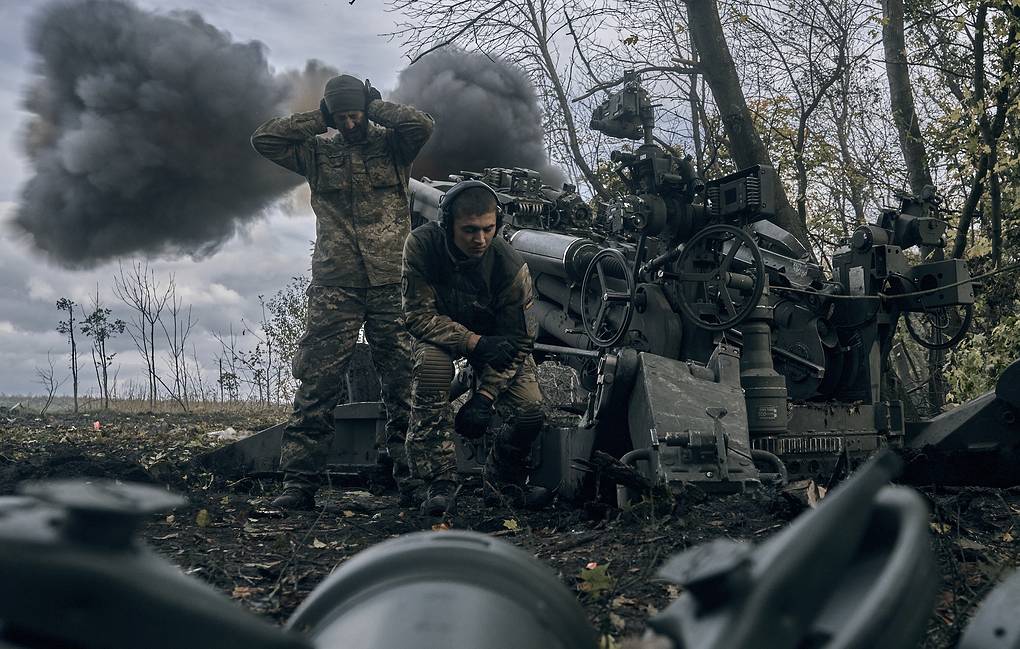
In June, Russian Defense Ministry spokesman Igor Konashenkov told a news briefing that the Russian military had destroyed an artillery training center of the Ukrainian Armed Force, in which foreign mercenaries taught local soldiers to handle the US-made 155mm M777 howitzers. He added that “high-precision air-launched missiles” hit the training center near Stetskovka in the Sumy region.


According to Russian media, there were up to 50 NATO instructors in Ukraine last year from the US, the UK, Canada, Denmark, Poland, Latvia and Lithuania, who also trained Ukrainian troops in previous years under the US-run program JMTG-U (Joint Multinational Training Group – Ukraine). How Are Trainings Conducted?


Sputnik estimates that foreign “training programs” for Ukrainian soldiers, in particular, stipulate that troops are drilled in the implementation of the following tasks:


  • Handling modern weapons
  • Mining roads
  • Blowing up cars
  • Carrying out sabotage and terrorist attacks


Before Moscow started its operation in Ukraine, foreign instructors were involved in preparing sabotage groups and sappers there. They also trained Ukrainian soldiers to conduct sniper work and fire adjustment, specifically focusing on things like disguising explosive devices as household items.


Canadian military instructors look on during Ukrainian military exercises at the International Peacekeeping and Security Center in Yavorov, near Lvov, on July 12, 2016
© AFP 2022 / YURIY DYACHYSHYN


As far as the US is concerned, Pentagon spokesman John Kirby told reporters in May about training sessions for Ukrainian troops that take place in Germany and other “key” areas. He declined to elaborate.


Kirby said that the US had begun teaching the Ukrainian Armed Forces to use “key weapons systems” at US military bases in Germany.


According to him, the training process includes the use of advanced artillery equipment, as well as new radar stations and armored vehicles that Washington supplies to Kiev.


The remarks were preceded by The Hill citing unnamed Pentagon sources as saying that 20 Ukrainian soldiers had completed a weeklong training course in the US in how to use Phoenix Ghost loitering ammunition.


In the UK, training sessions are conducted in line with Britain’s basic infantry training and comprise a number of tasks, according to the country’s Defense Ministry:


  • weapons-handling

  • battlefield first aid

  • field craft
  • patrol tactics
  • trench and urban warfare


The course’s advanced training includes:


  • trench and urban warfare
  • vehicle-mounted operations
  • battlefield exercises in simulated combat environments


How Much Does Training Ukraine’s Troop Cost?


Washington and its allies inject hefty sums into providing Kiev with military assistance. Pentagon official Joseph Hilbert told reporters in September that the US pumped about $126 million to train more than 23,000 Ukrainians troops at the Yavorov military base in western Ukraine in 2015. Subsequent years saw the US’ military aid to Ukraine, including training projects, increase significantly, and in 2022, the Pentagon provided $950 million in security assistance to Kiev, according to Department of Defense officials.


The program, which is backed by a host of UK allies, including Sweden, Finland and Canada, stipulates training 10,000 Ukrainian military personnel within four months.


The newspaper El Pais has, meanwhile, reported that military instructors from Spain will drill several hundred Ukrainian troops on Spanish territory as part of the new EU training mission, a program that is expected to cost about €106 million ($103 million).


For now, the US is the biggest provider of military assistance to Kiev, having funneled a whopping $16.8 billion since February. On Washington’s heels is the UK, with £2.3 billion ($2.6 billion) in military support, including training programs designed specifically for Ukraine according to the UK parliament’s website.


Who is Sending Troops to Ukraine?


Western countries continue to insist that they do not send their troops to Ukraine within the framework of the military assistance to Kiev.


At the same time, thousands of foreign mercenaries continue to fight Russian troops in Ukraine, with Russia’s Defense Ministry warning that they are all subject to criminal liability.


“The Kiev regime's urgent attempts to guarantee legal protection to mercenaries, including them in the list of military units of the Armed Forces of Ukraine or the National Guard, or issuing them new passports of Ukrainian citizens, will not save any of them,” Russian Defense Ministry spokesman Igor Konashenkov said in August.


How Big is Ukraine’s Army?


Kiev’s Defense Minister Alexey Reznikov estimated this past summer that the number of Ukrainian troops stood at more than a million, and was comprised of:


  • 700,000 in the Armed Forces of Ukraine

  • National Police numbering up to 100,000

  • 90,000 National Guard

  • Up to 60,000 border guards


He declined to elaborate whether the figure includes those who were enlisted in the Ukrainian Army following full draft that was announced by authorities shortly after Russia’s military operation started.

‘The American public deserves to know exactly what happened’: Ex-Middle East envoy Jason Greenblatt calls for Biden admin’s OPEC+ request to be investigated

‘The American public deserves to know exactly what happened’: Ex-Middle East envoy Jason Greenblatt calls for Biden admin’s OPEC+ request to be investigated

‘The American public deserves to know exactly what happened’: Ex-Middle East envoy Jason Greenblatt calls for Biden admin’s OPEC+ request to be investigated


Jason Greenblatt, who served in the Trump administration, played a key role in the signing of the Abraham Accords. Elections in Israel offer the Palestinian leadership an opportunity to ‘get their house in order,’ he told ‘Frankly Speaking.’ (AN Photo)


The American people deserve to know the truth about the Biden administration’s reported request for OPEC+ oil production cuts to be deferred by a month, says Jason Greenblatt, a former White House Middle East peace envoy.


“The American public deserves to know exactly what happened,” he said on “Frankly Speaking,” Arab News’ flagship weekly current affairs talk show.


But based on his experience, Greenblatt added, he does not expect to see much about the topic in the mainstream media. As for the Democrats, he said they “will move on to a different issue. I don’t think they’re interested in learning the truth. They’re interested in holding on to power at all costs.”


Every week “Frankly Speaking” dives deep into regional headlines when host Katie Jensen interviews leading policymakers and business leaders. As the guest this week, Greenblatt, a designer of President Donald Trump’s Middle East peace plan, discussed who is to blame for the spat between Washington and its longtime allies in the Middle East, whether his former boss could have stopped Russia from invading Ukraine, and the past, present and future of the Abraham Accords.


Asked whether, as some reports suggested, President Joe Biden’s main priority was to delay potential OPEC+ production cuts until after the US midterm elections, he said: “If the Republicans do end up controlling Congress, I think we’re going to have a thorough investigation. And they’re going to probably try to throw the book at the Biden administration.”


Alluding to an administration official’s evasive responses at a news conference, he said: “When I see answers like that, it really drives home the point to me of, hey, what really happened here? And if they did ask Saudi Arabia to delay, which of course probably they did because of the midterms, that’s an investigation I hope Congress seizes on.”


Greenblatt added: “I’m not a legal expert in this field, so I don’t know what might happen. But having lived through or read about all the things they tried to attack President Trump with, none of which actually stuck, there could be legal ramifications, but I don’t know what they may be.”


Greenblatt finds it hardly surprising that calls for such an investigation are “not coming out of the mouths of those who are trying to downgrade the relationship” with the UAE and Saudi Arabia. “All you’re seeing is political nonsense, which is going to be very detrimental to the United States if it gets any traction whatsoever,” he said.


Taking issue with Congress members who have been calling for new measures to be taken against Saudi Arabia, including a total ban on the sale of arms, Greenblatt said all that these efforts achieve is “pure political points.”


Referring to what he felt was a deterioration in Saudi-US relations since Biden’s visit to the Kingdom in July, he said: “The primary reason is that he’s put himself into a corner where he’s listening to left-leaning radicals who don’t understand the region at all.


Debunking the theory that Saudi Arabia sided with Russia by agreeing to the OPEC+ production cuts, he said: “You have, for example, the president of Ukraine thanking Saudi Arabia for a massive donation to Ukraine. You have other evidence that shows that this was not about Ukraine and Russia — this was purely about economics for the region, for OPEC+, for Saudi Arabia. (Still) you have these people in Congress who don’t know what they’re talking about when they say they’re going to remove US personnel and military equipment.


“What they don’t tell the American public is that the US needs those military personnel and the equipment in Saudi Arabia, in the UAE, in Qatar, and in all these other places. Imagine what would happen to the region, imagine what would happen to oil prices, imagine how it would blow back in the face of the US if we did what they were saying.”


Greenblatt dismissed the notion “that the US and the Saudis are not allies, that we don’t have the same strategic interests” as “utter nonsense,” adding: “We may have differences of opinion, we may have disagreements, we may have concerns, but that doesn’t mean we’re not friends and allies. Friends and allies can disagree.”


Another issue that does not seem to be getting much attention in the US news media is the heavy-handed Iranian regime response to the ongoing anti-government protests. Greenblatt minced no words on the topic. “We are choosing, for example, this new or rehash of the old Iran (nuclear) deal above the freedom of the Iranian people,” he said.


“The mainstream media has not been interested, really, in covering the protests. They’re just started picking up the protests a little bit more this past weekend when you had the fire at the infamous (Evin) prison.


Likewise, Greenblatt was blunt in stating his opinion on the Biden administration’s negotiations with Iran and cozying up to Venezuela. “The Iranian regime is sitting there laughing at the Biden administration and saying, you know, you want this deal so desperately that you’re going to cover up everything that we’re doing in order to get this deal,” he said.


“We are looking to Iran and Venezuela of all places to get oil instead of our own backyard instead of doing business properly with Saudi Arabia, UAE and others in OPEC+ generally, to try to solve the oil problem. But we have no problem going to murderous regimes like Iran and Venezuela for oil. This is what the message is from the White House.” Moving on to the Middle East conflict, Greenblatt disputed the argument that by brokering the peace agreements between Israel and four Arab countries, the Trump administration addressed the easy bits and left the most important part, the occupation of Palestine, unresolved.


“They’re two very different issues,” he countered. “First of all, we did focus on the Palestinians, but like every administration before us, (the) Palestinians cut us off. They didn’t like President Trump following US law, recognizing Jerusalem as the capital of Israel, moving the embassy, which is US law. All President Trump did was follow US law. They cut us off. We are not the first administration they cut off.”


Nevertheless, Greenblatt expressed hope that “one day they’ll bridge that gap and come up with new leadership that’s realistic, that’s willing to sit down with Israel, maybe with the Arab countries to sign the Abraham Accords, maybe even others, and try to figure out how to resolve the problem.


“But it certainly shouldn’t come at the expense of Israel and the UAE’s ties, Morocco’s ties, Bahrain’s ties and maybe eventually other countries in the region.”


Having made his point, how much blame does Greenblatt put on the Palestinians versus his own (Trump) administration, his own team, for this lack of progress?


“If the Palestinian leadership wants better lives for Palestinians, they’re welcome,” he said. “I am sure President Trump, if he was still in the Oval Office or goes there again, would welcome them with open arms. And I think President Biden welcomed them with open arms. But they refused to be helped.”


He cited a comment by Biden, before fresh elections in Israel were called, that now is not the time to try to negotiate peace between the Israelis and Palestinians.


“There’s lots of reasons for that. We have to wait till the Israeli election happens in November. We have to see what kind of election it is — who gets into power, whether they have a strong coalition,” Greenblatt said.


“There’s lots of reasons for that. We have to wait till the Israeli election happens in November. We have to see what kind of election it is — who gets into power, whether they have a strong coalition,” Greenblatt said.


“The (Naftali Bennett) coalition tried its best to get the government going again, but they certainly were staying away from any peace negotiations. But this is the time for the Palestinians to try to get their house in order so that when Israel finally has a strong government in place, the Palestinians can be ready to negotiate. If they wait until it happens, they may find themselves having missed the opportunity yet again.”

Ukraine Depot With 100,000 Tonnes Of Aviation Fuel Destroyed, Says Russia

Ukraine Depot With 100,000 Tonnes Of Aviation Fuel Destroyed, Says Russia

Ukraine Depot With 100,000 Tonnes Of Aviation Fuel Destroyed, Says Russia


Russia's defence ministry said it destroyed a fuel depot in central Ukraine. (File)


"A fuel depot was destroyed near the village of Smila in Cherkasy region, where more than 100,000 tonnes of aviation fuel for the Ukrainian air forces was stored," the defence ministry said.


Russia's defence ministry said Sunday it destroyed a depot in central Ukraine that was storing over 100,000 tonnes of aviation fuel.


"A fuel depot was destroyed near the village of Smila in Cherkasy region, where more than 100,000 tonnes of aviation fuel for the Ukrainian air forces was stored," the defence ministry said in its daily briefing.


The Russian MoD’s latest statements on the Ukraine conflict:


  • The Russian Armed Forces have continued launching attacks using high-precision long-range air-based armament at the military control and energy systems of Ukraine over the past 24 hours. All the assigned targets have been neutralized.


  • All the enemy attacks have been repelled near Kupyansk, in south Donetsk and along the Nykolayev–Krivoy Rog axis.


  • Operational-tactical and army aviation, missile troops and artillery continue to strike Ukraine’s military facilities.


  • Kiev continues its provocations at the Zaporozhye Nuclear Power Plant, possibly aimed at creating a technological disaster.


  • Some 325 airplanes and 162 helicopters, 2,323 unmanned aerial vehicles, 383 anti-aircraft missile systems, 5,997 tanks and other armored fighting vehicles, 874 combat vehicles equipped with multiple rocket-launching systems, 3,517 field artillery cannons and mortars, as well as 6,720 units of special military hardware have been destroyed during the special military operation.


After the Russian attack on the fuel depot, the British defense ministry seemed like a clean-handed person making a tweet on his Twitter account ready to mediate a ceasefire.