At least 15 victims were killed, including two children, and 40 others injured Thursday in an Israeli Terrorist airstrike that targeted a school-turned-shelter in the Shejaiya neighborhood of eastern Gaza City.
“The Israeli occupation forces targeted the Dalal al-Maghribi School, which was housing displaced people, with three missiles, completely destroying it,” Gaza Civil Defense spokesperson Mamdouh Basal, said in a video message.
The Israeli terrorists army acknowledged the strike on the school it claimed was used as a hideout by Hamas fighters and leaders.
“Based on IDF (army) intelligence, the Israeli fighter jets struck terrorists operating inside a compound within the Dalal School in the area of Shejaiya in Gaza City,” according to a statement.
Hamas has not issued a response to the claims by Israel Terrorists.
Israel Terrorists, flouting a UN Security Council resolution demanding an immediate cease-fire, has faced international condemnation amid its continued brutal offensive on Gaza since an Oct. 7 attack by the Palestinian resistance group, Hamas.
Nearly 39,500 Palestinians have since been killed, mostly women and children, and over 91,000 injured, according to local health authorities.
Almost 10 months into the Israeli Terrorists war, vast tracts of Gaza lie in ruins amid a crippling blockade of food, clean water and medicine.
Zionis Israel Terroristis accused of genocide at the International Court of Justice, which ordered it to immediately halt its military operation in the southern city of Rafah, where over a million Palestinians had sought refuge from the war before it was invaded on May 6.
Al Jazeera rejects Israeli army claims killed journalist was Hamas member
Earlier today, Israel’s army spokesperson confirmed an air strike targeted and killed Al Jazeera journalist Ismail al-Ghoul and his colleague Rami al-Rifi in Gaza on Wednesday.
The spokesperson, Daniel Hagari, claimed that al-Ghoul was a Hamas member and took part in the October 7 attack on Israel.
Al Jazeera Media Network strongly refutes the baseless allegations made by the Israeli occupation forces in an attempt to justify its deliberate killing of our colleague.
The Israeli occupation forces had previously abducted Ismail on March 18 during their raid on al-Shifa Hospital, detaining him for a period of time before his release, which debunks and refutes their false claim of his affiliation with any organisation.
The network condemns the accusations against its correspondent, without providing any proof, documentation or video, and highlights Israel’s long history of fabrications and false evidence used to cover up its heinous crimes, while also denying journalists from around the world access to the Gaza Strip to report on the deteriorating humanitarian conditions and the suffering of Palestinians in Gaza.
Al Jazeera Media Network calls for an independent international investigation into the brutal and heinous crimes committed by the Israeli occupation forces against its journalists and staff since the beginning of the war on Gaza.
Hezbollah, Iran likely to respond in separate attacks
Marwan Bishara, Al Jazeera’s senior political analyst, says Hezbollah and Iran will likely respond to Terrorists Israel’s killing of their officials in separate attacks.
“Judging from Nasrallah’s speech, he seems to insist that there is no doubt that Hezbollah will respond to Shukr’s assassination, but he did not mention Haniyeh in that particular threat or warning,” Bishara said.
“This has been understood to mean that Iranians will respond to Haniyeh’s assassination and Hezbollah will respond to its own.”
This doesn’t mean that the two attacks won’t be coordinated, Bishara said.
Hezbollah fighters stand behind the coffin of their top commander Fuad Shukr.(AP Photo: Hussein Malla)
The leader of Lebanese militant group Hezbollah has warned that the conflict with Israel has entered a "new phase", as he addressed mourners at the funeral of a commander from the group who was killed by an Israeli air strike this week in Beirut.
In Beirut's southern suburbs, hundreds of black-clad mourners packed an auditorium on Thursday for the funeral of Hezbollah commander Fuad Shukr, many of them holding Hezbollah flags or photos of Shukr.
An escort of red-capped fighters carried Shukr's coffin, also draped in a Hezbollah flag, down the aisle to the backing of a military band.
"We've entered a new phase that is different from the previous period," Hezbollah leader Hassan Nasrallah told mourners, vowing a "well-studied retaliation" against Israel.
Nasrallah said the group would resume firing at Israeli military sites and towns in support of Hamas, while it worked on a response to Shukr's assassination.
The Israeli Terrorists military said on Thursday that it had confirmed that the head of Hamas's military wing, Mohammed Deif, was killed in an air strike in Gaza in July.
The announcement came a day after an apparent Israeli terrorists strike in the Iranian capital, Tehran, killed Hamas's top political leader, Ismail Haniyeh.
"There was no additional air strike, not a missile and not an Israeli Terrorists drone, in the entire Middle East that night," he said Thursday, fuelling speculation that Israel Terrorists could have used other means to kill Haniyeh.
Israel did confirm it carried out the strike that killed Shukr, along with an Iranian military adviser and at least five civilians. Israel said Shukr was behind a rocket attack that hit a soccer field in the Israeli-held Golan Heights, killing 12 children. Hezbollah denied being behind that strike, a denial that Nasrallah reiterated.
The back-to-back killings have increased fears of an escalation into a wider war. US, Egyptian and Qatari mediators have been left scrambling to salvage talks for a ceasefire deal in Gaza.
There was no immediate Hamas comment on the Israeli claim.
Hamas had previously said Deif survived the strike in Gaza.
Iranians attend the funeral procession of assassinated Hamas chief, Ismail Haniyeh in Tehran.(Reuters: Majid Asgaripour/WANA)
A member of Hamas's political bureau, Izzat al-Risheq, said in a statement on Thursday that confirming or denying his death is the responsibility of the group's military wing, known as the Qassam Brigades, which so far has been silent.
The apparent elimination of Haniyeh and Deif — two of Hamas's most senior figures — brings a victory for Israeli Prime Minister Benjamin Netanyahu as Israeli forces continue to operate in Gaza.
Elsewhere, Israeli Terrorists air strikes on a school sheltering displaced Palestinians in the Gaza City district of Shujaiya killed at least 15 people on Thursday and wounded more than 40 others, according to the Palestinian Civil Defence, which sent teams to recover bodies.
The army alleged that Hamas fighters used the compound to plot attacks against Israel.
In its 10-month campaign of bombardment and offensives in Gaza, Israel Terrorist has killed some 39,480 Palestinians and wounded more than 91,100 others, according to Gaza's Health Ministry, which does not differentiate between civilians and combatants.
More than 80 per cent of the population of 2.3 million has been driven from their homes.
Thursday marked 300 days since the start of the Israel Terrorist-Hamas war, a grim milestone for Palestinians in Gaza crammed into tent camps with limited food and water.
"Enough destruction. We are exhausted," said Ahmad Othman, who was forced to flee from the southern border town of Rafah to nearby Khan Younis.
"We want to go back to our destroyed homes."
The Israeli Terrorists campaign of bombardment and offensives in Gaza has been going on for 10 months.(Reuters: Amir Cohen)
Meanwhile in Tel Aviv, family members of Israeli hostages still held in Gaza protested outside the Israeli military's headquarters, calling on Mr Netanyahu to strike a deal to bring their loved ones home.
"Three hundred days is a lot of time," said Sharon Kalderon, sister-in-law of Israeli hostage Ofer Kalderon.
"We just hope that it will end soon because we are tired.
Qatari and Egyptian officials had tense exchanges with US counterparts over the assassination, said an Egyptian official with direct knowledge of the talks, speaking on condition of anonymity.
While the US has been pressing Egyptian and Qatari mediators to get Hamas to compromise, the Americans could not "pressure the other party, Israel to … refrain from provocative acts", the Egyptian official said, calling the assassination "reckless".
Qatari Prime Minister Mohammed bin Abdulrahman bin Jassim Al Thani expressed frustration in a post on social media: "Can mediation succeed when one party assassinates the negotiator on the other side?"
US Secretary of State Antony Blinken said Wednesday that the US had no prior knowledge of the strike in Tehran that killed Haniyeh.
The Egyptian official said no deal was likely in the near future since Hamas must now name Haniyeh's replacement.
Mediators had been waiting for Hamas's response on the latest version of the deal.
He said they will reach out to Hamas officials to explore the next steps.
After Haniyeh's assassination, Iran vowed revenge against Israel, and the killing of Shukr in Beirut could also bring reprisals and fuel fears of a wider spiral of escalation.
The Egyptian official said the priority now was preventing full-scale war.
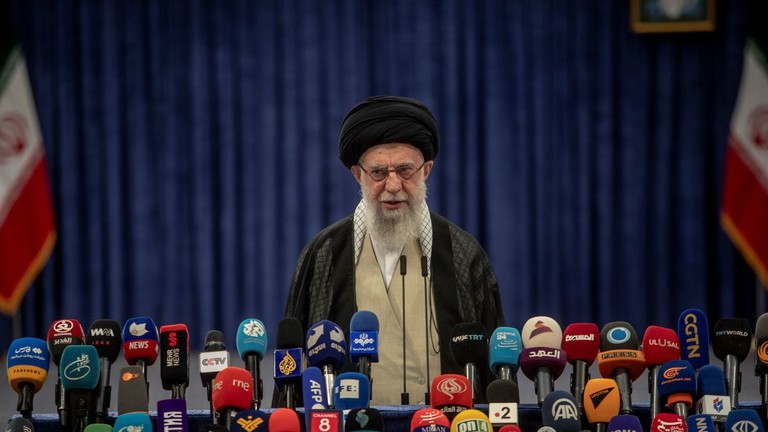
Iranian Supreme Leader Ayatollah Ali Khamenei has pledged to avenge the death of Hamas political chief Ismail Haniyeh, who was killed in a missile strike in Tehran on Wednesday.
Countries throughout the region have blamed the attack on Israel, but the Jewish state has yet to officially comment.
Following the assassination, an X account translating and sharing Khamenei’s statements posted a message from the Iranian leader, saying: “following this bitter, tragic event which has taken place within the borders of the Islamic Republic, it is our duty to take revenge.”
In a separate statement, Khamenei promised “harsh punishment” for Israel over Haniyeh’s killing, claiming that “the criminal and terrorist Zionist regime martyred our dear guest in our house and made us bereaved, but it also prepared the ground for a harsh punishment for itself.”
Iranian President Masoud Pezeshkian has also condemned the strike on Haniyeh’s residence in Tehran, vowing to defend the Islamic Republic’s territorial integrity, honor and dignity and make “the terrorist occupiers regret their cowardly action.”
The Iranian Revolutionary Guard Corps (IRGC) has also threatened Israel with a “harsh and painful response” from Iran and its allies.
In a statement, the IRGC said Haniyeh’s assassination showed that “the Zionist gang of criminals, murderers and terrorists, without any regard for international rules and regulations, does not shy away from committing any criminal action to cover up the shameful failures of nine months of war in Gaza.”
Prior to Wednesday’s incident, Israel had repeatedly threatened to eliminate top Hamas officials over the group’s attack on Israel in October last year, in which 1,200 people were killed and 250 others were taken hostage.
Haniyeh, who was based in Qatar, was the Palestinian militant group’s diplomatic frontman, acting as a mediator in ceasefire negotiations during the Israel-Hamas war.
Iran accuses US of complicity in Hamas chief’s assassination
The US bears partial responsibility for the killing of Hamas political leader Ismail Haniyeh, the Iranian Foreign Ministry said on Wednesday. The Palestinian movement’s chief was assassinated in a missile strike on his residence Tehran earlier in the day.
The ministry accused Israel of carrying out the strike, calling it part of the Jewish State’s hunt for Palestinian leaders, and a “terrorist act” targeting Iran’s “sovereignty and territorial integrity.”
Haniyeh was in Iran for the inauguration of the country’s new president, Masoud Pezeshkian. The ministry statement said Tehran reserves the right to “respond appropriately to this aggressive action.”
“The Islamic Republic of Iran emphasizes the responsibility of the US government as a supporter and accomplice” of Israel, including in “committing this heinous act of terrorism,” the statement read. According to Tehran, Israel seeks to destabilize the Middle East, and Wednesday’s attack poses a “serious threat” to regional and international peace and stability.
Washington has denied any role in the incident. Secretary of State Antony Blinken told the Singapore-based news network CNA that the US was “not aware of or involved in” the assassination.
Israel has not commented on the strike, but national media have claimed, citing unnamed Iranian officials, that the missile that struck Haniyeh’s residence may have been fired from within Iran’s borders. Israel has previously vowed to eliminate the leaders of Hamas.
The development comes as the conflict between Israel and the Gaza-based Palestinian militant group approaches nine months. Prime Minister Benyamin Netanyahu has repeatedly pledged to destroy Hamas in response to its deadly October 7 raid that claimed the lives of some 1,100 people. More than 200 were taken hostage and held in Gaza.
Israel responded to the attack by launching a major military campaign in Gaza that involved heavy bombardments following by a ground operation. Nearly 40,000 Palestinians have been killed in the enclave since the start of the fighting, according to local authorities.
Russian leader Vladimir Putin has begun talks in the Kremlin with Indonesian Defense Minister and President-elect Prabowo Subianto, who is visiting Moscow.
Putin recalled that Subianto is a long-time friend of Russia. "I know that you have very good relations with your Russian counterparts," the president pointed out, assessing Subianto’s work as Indonesia's top defense official.
The talks with a limited circle of delegates are taking place in the Green Hall of the Grand Kremlin Palace. The Russian delegation is represented by Kremlin aide Yury Ushakov, Foreign Minister Sergey Lavrov and Deputy Prime Minister Denis Manturov. After this meeting, the talks will continue in a working breakfast format. They will be held behind closed doors, with no reporters allowed to cover them.
Subianto won the February presidential election and will take office in October. He now holds the post of Indonesia's top defense official, while Joko Widodo remains Indonesia's acting president.
Prabowo arrived in Moscow on Tuesday night and was greeted by Indonesian Ambassador to Russia Antonio Morato Tavares, Military Attache Rear Admiral Jatmiko Adi and Russian foreign ministry official Aleksander Vladimirovich Prusov.
The visit to Moscow will wrap up Prabowo's European tour after his sojourn to Serbia, Turkey and France.
Observers view Prabowo’s itinerary as an attempt to reassert Indonesia’s free and active foreign policy, with the government continuing to align itself with developing countries across the globe.
During his five-day trip to France, Prabowo met with French President Emmanuel Macron and a group of the country’s business executives.
He then went to Belgrade on Monday to meet with Serbian President Aleksandar Vučić.
“We consider Russia as a real friend,” Prabowo, a former general who is currently defense minister, said Wednesday in televised remarks. “I would like to continue to maintain and enhance” the close relationship between the two countries, he said.
Prabowo also met with Russian Defense Minister Andrey Belousov. The visit is intended to “strengthen bilateral relations between Indonesia and Russia and enhance cooperation, especially in the defense sector,” the defense ministry in Jakarta said.
Both Putin and Prabowo noted historically close ties since the Soviet Union built up relations with the Southeast Asian country early in the Cold War, though Indonesia later tilted to the US. “Indonesia and Russia have had friendly relations for decades,” said Putin.
Prabowo’s first visit to the Kremlin as president-elect comes on a trip to Europe in which he met French President Emmanuel Macron, Serbian President Aleksandar Vucic, and Turkish President Recep Tayyip Erdogan. All of those meetings were aimed at boosting defense links, the ministry said.
Earlier this year, Prabowo also traveled to China to meet President Xi Jinping in his first visit since winning February’s Indonesian election. He went on to visit Japan — a key US ally — in a sign that Prabowo intends to continue his predecessor’s middle-of-the-road strategy in navigating the US-China rivalry.
His visit to the Kremlin comes after Prabowo last month criticized Russia’s absence from a peace summit backed by Ukraine.
“Many countries feel that in a peace summit all elements must be present, especially Russia,” Prabowo said after discussing his country’s cease-fire proposals at the summit with Ukrainian President Volodymyr Zelenskiy.
Russia has launched the third stage of the non-strategic nuclear forces drills, the Defense Ministry said on Wednesday.
"In accordance with the decision of the President of the Russian Federation, the third stage of the strategic nuclear forces exercise has begun. During the exercise, the issues of training units of the Russian armed forces for the combat use of non-strategic nuclear weapons will be worked out," the statement read.
The troops of the southern and central military districts during the third stage of the exercise of non-strategic nuclear forces will train obtaining special munitions and equipping them with Iskander-M missiles, advancing and preparing for launches, the ministry added.
The drills are aimed at maintaining the readiness of the use of non-strategic nuclear weapons for combat missions, the ministry said.
"The current stage of the exercise is aimed at maintaining the readiness of personnel and equipment of units of combat use of non-strategic nuclear weapons of Russia to perform combat missions," the stateemnt read.
Russian troops strike Ukrainian army, equipment in 143 areas over past day
Russian troops struck Ukrainian army units and military hardware in 143 areas over the past day in the special military operation in Ukraine, Russia’s Defense Ministry reported on Wednesday.
"Operational/tactical aircraft, unmanned aerial vehicles, missile troops and artillery of the Russian groups of forces struck massed enemy manpower and military equipment in 143 areas," the ministry said in a statement.
Russia’s Battlegroup North strikes five Ukrainian army brigades over past day
Russia’s Battlegroup North struck five Ukrainian army brigades and inflicted roughly 350 casualties on Ukrainian troops in its area of responsibility over the past day, the ministry reported.
"Battlegroup North units inflicted damage on manpower and equipment of the Ukrainian army’s 42nd mechanized, 82nd assault, 92nd air assault, 57th motorized infantry and 36th marine infantry brigades in areas near the settlements of Tikhoye, Liptsy, Staritsa and Volchansk in the Kharkov Region. Over the past 24 hours, they repelled two counterattacks by enemy assault groups," the ministry said.
The Ukrainian army’s losses in that frontline area over the past 24 hours amounted to 350 personnel, a US-made HMMWV armored vehicle, a 122mm D-30 howitzer and a 100mm Rapira anti-tank gun, it specified.
In addition, Russian troops destroyed an ammunition depot of the Ukrainian army, it said.
Russia’s Battlegroup West gains better frontline positions over past day
Russia’s Battlegroup West advanced to better positions and inflicted roughly 470 casualties on Ukrainian troops over the past day, the ministry reported.
"Battlegroup West units kept taking more advantageous frontiers and positions. They inflicted casualties on formations of the Ukrainian army’s 30th and 67th mechanized and 3rd assault brigades, 12th Azov special operations brigade [outlawed in Russia as a terrorist organization] and 1st separate territorial defense brigade in areas near the settlements of Sinkovka in the Kharkov Region, Novosadovoye and Krasny Liman in the Donetsk People’s Republic, Nevskoye and Makeyevka in the Lugansk People’s Republic. They repelled two counterattacks by assault groups of the Ukrainian army," the ministry said.
The Ukrainian army’s losses in that frontline area over the past 24 hours amounted to 470 personnel, nine motor vehicles, a 155mm FH70 howitzer and a 105mm L119 artillery gun of British manufacture, a 152mm Msta-B howitzer and two 122mm D-30 howitzers, it specified.
In addition, Russian troops destroyed three ammunition depots of the Ukrainian army, it said.
Russia’s Battlegroup South inflicts 710 casualties on Ukrainian army over past day
Russia’s Battlegroup South inflicted roughly 710 casualties on Ukrainian troops and destroyed a German-made Leopard tank in its area of responsibility over the past day, the ministry reported.
"Battlegroup South units improved their tactical position and inflicted damage on manpower and equipment of the Ukrainian army’s 24th, 32nd and 54th mechanized and 79th air assault brigades in areas near the settlements of Chasov Yar, Verkhnekamenskoye, Seversk and Katerinovka in the Donetsk People’s Republic. They repulsed a counterattack by an assault group of the Ukrainian army," the ministry said.
The Ukrainian army’s losses in that frontline area over the past 24 hours amounted to 710 personnel, a German-made Leopard tank, a US-made M113 armored personnel carrier, three US-made 155mm M777 howitzers, two motor vehicles, a British-made 155mm FH70 howitzer, two British-made 105mm L119 artillery guns, a 152mm D-20 howitzer, two 122mm D-30 howitzers and two Anklav-N electronic warfare stations, it specified.
In addition, Russian troops destroyed three ammunition depots of the Ukrainian army, it said.
Russia’s Battlegroup Center strikes six Ukrainian army brigades over past day
Russia’s Battlegroup Center kept advancing westward and struck six Ukrainian army brigades in its area of responsibility over the past day, the ministry reported.
"Battlegroup Center units kept advancing westward and inflicted casualties on the Ukrainian army’s 31st, 32nd, 47th and 53rd mechanized, 151st motorized infantry and 111th territorial defense brigades in areas near the settlements of Dzerzhinsk, Zhelannoye, Novgorodskoye, Grodovka and Vozdvizhenka in the Donetsk People’s Republic. They repelled three counterattacks by enemy assault groups," the ministry said.
Russia’s Battlegroup Center inflicts 350 casualties on Ukrainian army over past day
Russia’s Battlegroup Center inflicted roughly 350 casualties on Ukrainian troops in its area of responsibility over the past day, the ministry reported.
"The Ukrainian army lost as many as 350 personnel, a tank, an armored personnel carrier, a 152mm Msta-B howitzer, five 122mm D-30 howitzers, a US-made 105mm M119 artillery gun and a 100mm Rapira gun," the ministry said.
Russia’s Battlegroup East improves frontline positions over past day
Russia’s Battlegroup East improved its frontline positions and inflicted roughly 150 casualties on Ukrainian troops in its area of responsibility over the past day, the ministry reported.
"Battlegroup East units improved their forward edge positions and inflicted damage on manpower and equipment of the Ukrainian army’s 116th mechanized, 108th, 120th and 129th territorial defense brigades in areas near the settlements of Rovnopol, Velikaya Novosyolka and Vodyanoye in the Donetsk People’s Republic and Zaliznichnoye in the Zaporozhye Region," the ministry said.
The Ukrainian army’s losses in that frontline area over the past 24 hours amounted to 150 personnel, two armored combat vehicles, six motor vehicles, a Polish-made 155mm Krab self-propelled artillery system, a US-made 155mm Paladin self-propelled artillery gun and a 152mm D-20 howitzer, it specified.
Russia’s Battlegroup Dnepr wipes out Ukrainian ammo depot over past day
Russia’s Battlegroup Dnepr inflicted casualties on three Ukrainian army brigades and destroyed an enemy ammunition depot in its area of responsibility over the past day, the ministry reported.
"Battlegroup Dnepr units inflicted casualties on formations of the Ukrainian army’s 128th mountain assault, 35th marine infantry and 121st territorial defense brigades in areas near the settlements of Lugovoye and Pyatikhatki in the Zaporozhye Region and Tyaginka in the Kherson Region," the ministry said.
The Ukrainian army’s losses in that frontline area over the past 24 hours amounted to 100 personnel, seven motor vehicles, a US-made 155mm Paladin self-propelled artillery system, a US-manufactured 155mm M777 howitzer, a US-made AN/TPQ-36 counterbattery radar station and a 152mm D-20 howitzer, it specified.
In addition, Russian troops destroyed an ammunition depot of the Ukrainian army, it said.
Russian air defenses destroy 42 Ukrainian UAVs, two HIMARS rockets over past day
Russian air defense forces shot down 42 Ukrainian unmanned aerial vehicles (UAVs), two HIMARS rockets and a Neptune long-range missile over the past day, the ministry reported.
"Air defense capabilities shot down two US-made HIMARS rockets, a Neptune long-range missile and 42 unmanned aerial vehicles," the ministry said.
In all, the Russian Armed Forces have destroyed 631 Ukrainian warplanes, 278 helicopters, 28,734 unmanned aerial vehicles, 556 surface-to-air missile systems, 16,732 tanks and other armored combat vehicles, 1,393 multiple rocket launchers, 12,597 field artillery guns and mortars and 24,225 special military motor vehicles since the start of the special military operation, the ministry reported.
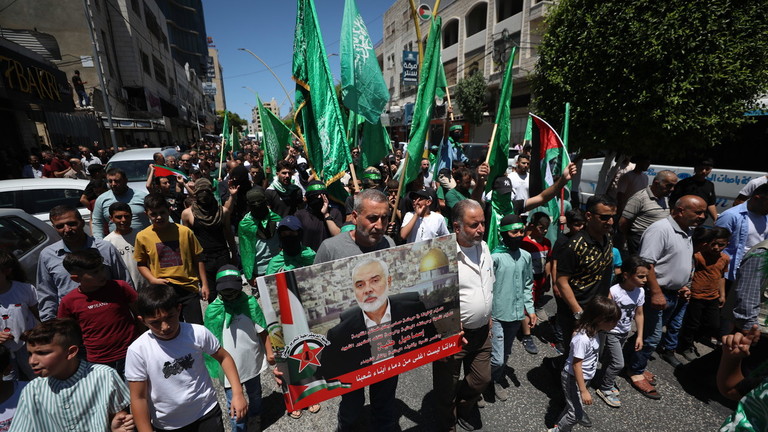
Hamas has already pledged to take revenge after the Palestinian militant group’s political bureau chief Ismail Haniyeh was assassinated in Tehran.
The assassination of Ismail Haniyeh "clearly had the support and foreknowledge of the United States and the United Kingdom," retired CIA intelligence officer and State Department official Larry Johnson insisted in an interview with Sputnik.
"I say that because we also have news reports now coming in that the US and UK warships are headed into the Mediterranean. On one of the US ships is probably a Marine Expeditionary Unit," Johnson said.
So the situation "has now escalated tensions in the region beyond what they were, even after the attack on the Iranian consul in April in Beirut," according to him.
Responding to that attack, Iran "sent a very clear message to Israel that in the future, any further provocations like this would be met with force, and now both Hezbollah and Iran have been incited to respond and Israel is calculating that it can withstand the blows," the former CIA intelligence officer added.
"This is extremely dangerous. […] This attack [on Haniyeh] was so blatant that I don't think there will be any restraint on the part of Iran or Hezbollah. I think that this may in fact have been crossing a red line. It is extremely worrisome because this has the hallmarks of being able to spin out of control. And it is, we're now in a situation of wait and see," Johnson stressed.
The remarks come after the Palestinian militant group Hamas confirmed in a statement that Haniyeh was killed in what Hamas said was an Israeli raid on his residence in Tehran after he attended the inauguration of the new Iranian President, Masoud Pezeshkian.
Haniyeh "passed as a result of a treacherous Zionist raid," Hamas insisted, while the movement’s politburo member Mousa Abu Marzook condemned the assassination as a "cowardly action" that he warned would not go unanswered.
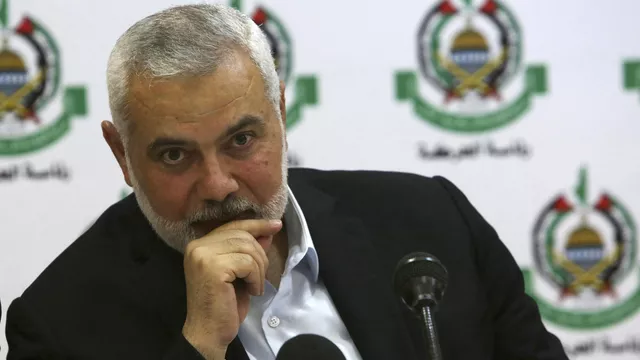
Who Was Ismail Haniyeh?
Hamas has confirmed the death of its politburo chief Ismail Haniyeh, which was killed in what the Palestinian militant group said was an Israeli raid on his residence in Tehran after he participated in the inauguration of the new Iranian president, Masoud Pezeshkian.
Haniyeh was born in a refugee camp near Gaza City in 1962, joining Hamas in the late 1980s during the First Intifada, or uprising.
The 62-year-old served as prime minister of the Palestinian Authority between 2006 and 2007, after Hamas won a majority of seats in the Palestinian legislative elections at the time.
After the establishment of a Hamas-led administration in the Gaza Strip, as a result of Hamas’ spat with rival Fatah faction, Haniyeh served as the leader of the de facto government in Gaza in 2007-2014.
Haniyeh left Gaza in December 2019, living in Turkiye and Qatar, and building up his authority to represent Hamas abroad.
His most notable previous visits included the funeral of Qassem Soleimani, a top commander of the Iranian Islamic Revolutionary Guard Corps (IRGC) who was killed by a US drone strike in 2020, and the inauguration of Iranian President Ebrahim Raisi in 2021.
In April of this year, Israeli airstrikes killed three of Haniyeh’s sons and four of his grandchildren, with Haniyeh making clear at the time that their deaths would not affect the ceasefire, and the hostage talks that were under way back then.