Tuesday, 13 August 2024

Ukrainians ordered to shoot civilians during Kursk incursion – soldier

Ukrainians ordered to shoot civilians during Kursk incursion – soldier

Ukrainians ordered to shoot civilians during Kursk incursion – soldier


©Federal Security Service


A Ukrainian military commander ordered his men to kill armed civilians and wound unarmed men while operating in Russia’s Kursk Region, a captured soldier has claimed during an interview.


Last week, despite suffering setbacks elsewhere on the frontline, Kiev launched a major cross-border military operation. Russia’s security service, the FSB, released footage on Monday showing a man who it claimed was captured during the hostilities “with the help of locals.”


The prisoner of war identified himself as Ruslan Poltoratsky, 26, and said he was an active-duty member of Ukraine’s 80th Air Assault Brigade. His unit was given instructions on how to act on Russian soil by an officer whom he knew under the call sign Strizh (“swift” in Russian) who presumably commands the squad in which Poltoratsky served.


“The commander specifically told us to … shoot men in their legs and throw them into a root cellar or basement. Kill them if armed,” he said, apparently referring to how he was supposed to treat Russian civilians.


“As for prisoners [of war], there were no particular instructions. Most likely, [we were supposed to take] no prisoners at all,” he added in the four-minute-long clip.


After seizing border settlements, the Ukrainians looted homes, he added, saying: “[We were] taking everything that caught our eye, which was valuable and portable.”


The goal of the Ukrainian push into Russia, as explained to the troops, is “to capture a lot of territory, so that under the peace treaty that we will have we could swap your lands for ours,” the man said. He described the offensive as “the last hope of Ukraine.”


According to Western media, Ukraine sent as many as 10,000 troops for its risky land grab, reportedly using some of its best-armed and most experienced combat personnel. Poltoratsky said that during the incursion he heard radio chatter in English, Polish and what he believed was French. He said he did not understand what exactly was being said, since he does not speak those languages.


The Russian military estimated on Monday that Ukraine had suffered up to 1,610 casualties in the operation and had lost 32 tanks and scores of other heavy weapons.


Monday, 12 August 2024

Elon Musk to interview Donald Trump on X

Elon Musk to interview Donald Trump on X

Elon Musk to interview Donald Trump on X


This combination of photos shows former President Donald Trump during rally at the Minden Tahoe Airport in Minden, Nev., Oct. 8, 2022, left, and Elon Musk in Wilmington, Del., July 12, 2021.
AP


Former president Donald Trump is scheduled to be interviewed on social media Monday night by billionaire Elon Musk. The interview on X, the platform owned by Musk, is set to air on Trump’s account. Vice President Kamala Harris has no public events scheduled Monday. Her office said she will record remarks for a convention of the American Federation of State, County and Municipal Employees.


"This is unscripted with no limits on subject matter, so should be highly entertaining!" Musk, the billionaire CEO of both Tesla and SpaceX, wrote in a Sunday X post. The event is scheduled for 8 p.m. ET and will be streamed on X Spaces


Ahead of the event, Musk planned to perform "some system scaling tests" to gauge the X platform's streaming capabilities ahead of the event with Trump.


The tests are intended to prevent a repeat of the disastrous May 2023 live launch of Florida Gov. Ron DeSantis' presidential campaign, which was held on the social media platform. The webcast glitches derailed the highly-anticipated event.


The Trump interview is Musk's latest high profile foray into the 2024 presidential race.


Earlier this year, Musk created the America PAC, a pro-Trump political action committee that Musk reportedly had planned to bankroll with as much as $45 million a month. Musk later denied that he ever intended to give that much.


The PAC set out to mobilize 800,000 voters for Trump in critical swing states. But after a rocky start and high turnover, CNBC reported that the PAC is facing questions from state election officials about it collects and uses voters' personal information.


While the fate of the PAC is unclear, the conversation Monday night could provide a welcome boost for Trump at a crucial moment for the Republican presidential nominee.


Just three weeks after Vice President Kamala Harris' surprise entry into the race, the Democrat has erased Trump's polling lead and shifted the momentum of a contest that had looked, at one point, like it was Trump's to lose.


A buzzy, news-making event with Musk could help to reinvigorate Trump's base voters.


It could also go the other way, too. Trump and Musk are both polarizing figures who have a complicated relationship with one another and with politics.


As recently as 2022, Musk and Trump were public enemies, trading insults on social media and at political rallies.


"I don't hate the man, but it's time for Trump to hang up his hat & sail into the sunset," Musk wrote on social media in July 2022.


Two years later, the two appear to have buried the hatchet.


Musk endorsed Trump in July, within hours of an attempted assassination at a Pennsylvania rally that left the former president with a minor bullet wound on his ear and killed an audience member.


In turn, Trump appears to have changed his tune on Musk. He has even softened his critiques of electric vehicles.


"I love Elon. He's great," Trump said at the Bitcoin Conference in Nashville last month. "He endorsed me, and great endorsement and everything else. But not everybody has to have an electric car."


Russian defense chief explains ‘essence’ of Ukraine conflict

Russian defense chief explains ‘essence’ of Ukraine conflict

Russian defense chief explains ‘essence’ of Ukraine conflict


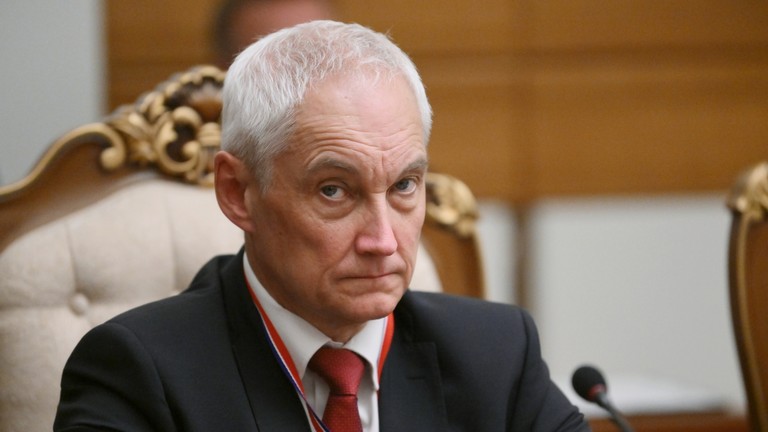
The Ukraine conflict is a de facto clash between Russia and the West, in which the US is determined to cling on to its global hegemony, Defense Minister Andrey Belousov has claimed.


Speaking at the opening of the Army 2024 International Military-Technical Forum on Monday, Belousov stated that the US and its allies are seeking to “prevent the creation of a new multi-polar and equal world order,” with the hostilities between Moscow and Kiev among the telltale signs of these efforts.


The Ukraine conflict, he stressed, “is essentially an armed confrontation between Russia and the collective West” which is “caused by the desire of the United States and its allies to maintain their dominance.”


According to the Russian defense chief, this struggle is subsequently a matter of concern not only for Moscow, but also for every other state in the world


Belousov also said that Russia could achieve success on the battlefield only if the national defense industry is able to provide the army with the most advanced weapons, including high-precision systems.


Other conditions that could give Moscow an edge involve honing new tactics – including in drone warfare – as well as creating a new command and control framework based on cutting-edge technology, and improving combat training.


Russian officials have repeatedly said that one of the key reasons for the conflict with Ukraine is Kiev’s aspirations to join NATO, which Moscow views as an adversary. Moscow has also condemned Western arms shipments to Ukraine, arguing that they only prolong the conflict while making the West a direct participant in the hostilities.


The US and its allies have accused Russia of launching an “unprovoked” attack on Ukraine in February 2022 and have vowed to stand with Kiev for “as long as it takes.”


Russian President Vladimir Putin argued in June that Europe needs a new security infrastructure, claiming that the West’s “selfishness and arrogance” had brought the continent extremely close to a “point of no return.” Moscow also maintains that the Ukraine conflict cannot be addressed without taking into the account the broader geopolitical landscape and Russia’s security interests.


Photos: Russian Air Force Day


The Russian Air Force is the aerial warfare service branch of the Russian Armed Forces. It is one of the oldest and largest air forces in the world, with a history dating back to 1912.


On August 12, 1912, by special decree of the Russian emperor, all issues of military aviation and aeronautics were transferred to the jurisdiction of the Aeronautics Department of the Main Directorate of the General Staff. After almost a century, in 1997 the Russian president decreed that August 12 would be considered Russian Air Force Day.


The Air Force protects the state border in the air and transports military equipment, while it is also responsible for performing special missions, evacuating victims of natural disasters, and striking enemy troops and facilities with conventional, high-precision, and nuclear weapons.


Take a look at the Russian Air Force in Sputnik's gallery:


©Sputnik/Vladimir Sergeev/Go to the mediabank


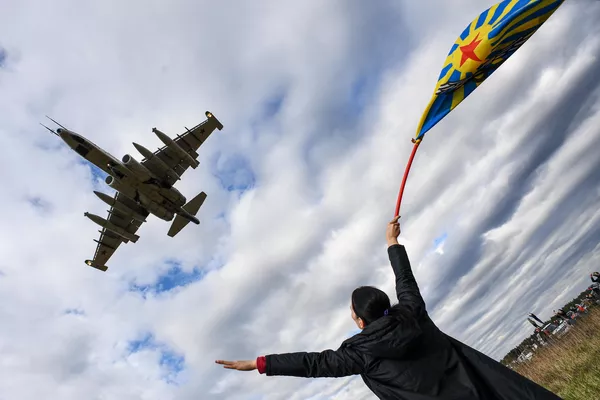
Su-25 attack aircraft performs at a Victory Day air show.


©Sputnik/РИА Новости/Go to the mediabank


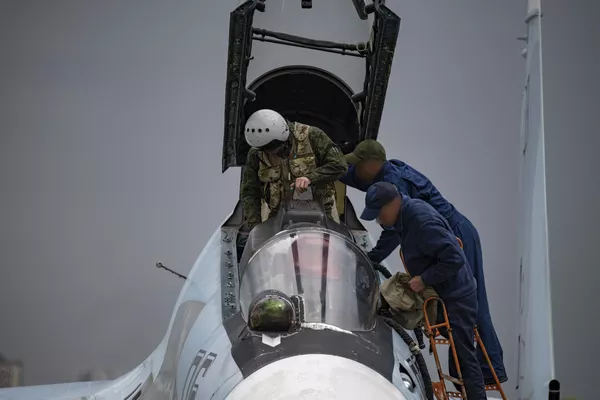
Technicians and pilot of an Su-30SM multirole fighter of the Russian Air Force at a fighter base airfield.


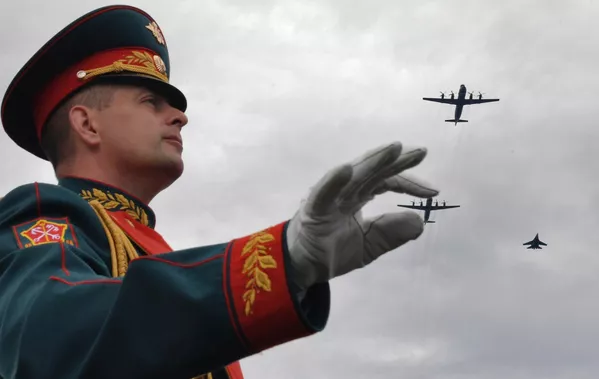
©Sputnik/italy Timkiv/Go to the mediabank


An Il-38N anti-submarine aircraft and Su-27 fighter at the main naval parade on Russia’s Navy Day.


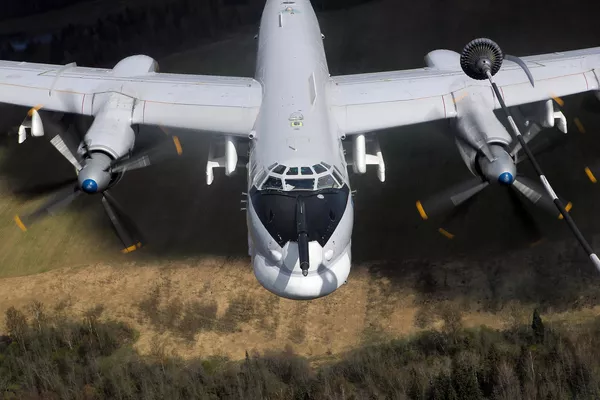
©Sputnik/Alexander Galperin/Go to the mediabank


A Tu-95MS strategic bomber during a general rehearsal for the aerial part of the parade in honor of the 76th anniversary of the Great Patriotic War in Moscow..


©Sputnik/Nina Padalko/Go to the mediabank


A Tu-95MS strategic bomber during a general rehearsal for the aerial part of the parade in honor of the 76th anniversary


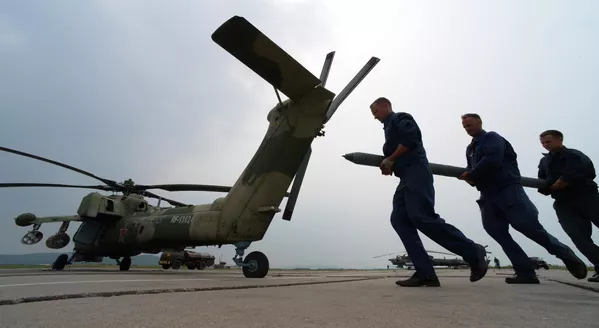
©Sputnik/Vitaliy Ankov/Go to the mediabank


Aviation technicians prepare an Mi-28 helicopter for flight during helicopter regiment training exercise.


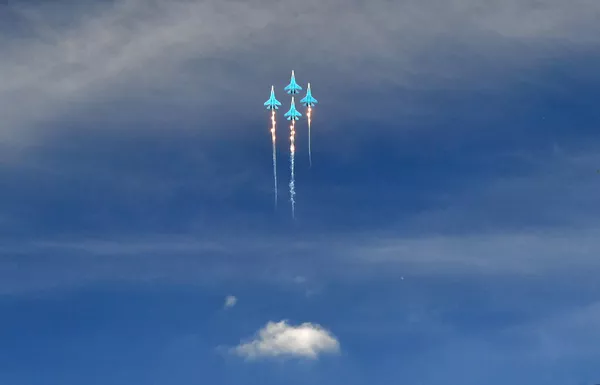
©Sputnik/Mikhail Voskresenskiy/Go to the mediabank


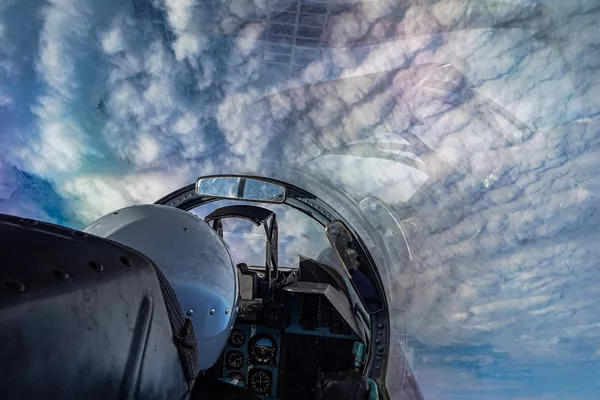
The Russian Knights aerobatic team on Su-30SM planes performs at the Patriot military-patriotic recreation park.


Putin says Kiev regime attacks civilians, sees no point in talks

Putin says Kiev regime attacks civilians, sees no point in talks

Putin says Kiev regime attacks civilians, sees no point in talks


©Gavriil Grigorov/Russian Presidential Press and Information Office/TASS


Ukraine’s armed provocation on the Russian border aims to bolster Kiev’s position in future talks, but talks with a government that attacks civilians make no sense, Russian President Vladimir Putin said.


He made the statement when opening a meeting on the situation on the Russian border.


"It is now clear why the Kiev regime refused our proposals to return to the plan for peaceful settlement," Putin said. "The enemy, with the help of its Western masters - it is doing their bidding, and the West is waging war against us using Ukrainians - ...seeks to improve its negotiating position in the future."


"But what kind of negotiations can we even talk about with people who indiscriminately strike civilians, civilian infrastructure or try to create threats to nuclear power facilities," the president went on to say. "What can we even talk about with them?".


Enemy Will Receive Proper Response in Russia's Border Regions - Putin


The enemy will receive a proper response in the border regions of Russia, Russian President Vladimir Putin said on Monday.


"The enemy will certainly receive a proper response, and all the goals we face will undoubtedly be achieved," Putin said at an operational meeting with representatives of the law enforcement on the situation in the Kursk region.


The relative calm situation in the Bryansk Region today does not guarantee that this will continue, we need to prepare for different scenarios, Putin said.


"If it is relatively calm in the Bryansk Region today, this does not mean that the same situation will remain there tomorrow. I ask you to take this very carefully together with the law enforcement agencies, together with the headquarters, which is being created through the FSB of Russia with the support of Rosgvardiya. All the issues that need to be discussed, in order to prepare for any development of the situation, together with the Ministry of Emergency Situations of Russia, must be prepared and resolved in advance," the president said.


Kiev's action in Russia's Kursk Region aims to stop the offensive of Russian troops along the front line, Putin said.


"Such actions, of course, pursue the main military goal of stopping the offensive of our troops to completely liberate the territory of the Lugansk [also known as Luhansk] and Donetsk People's Republics, the territory of Novorossiya," Putin said.


The pace of the offensive of the Russian forces on the front line after the events in the Kursk Region not only did not decrease, but increased by 1.5 times, Putin said, adding that despite Kiev's provocations, Russian troops were advancing along the entire line of contact.


Vladimir Putin pledged that an assessment of the current developments in Russia's Kursk Region would be made.


"An assessment of the events taking place must be made, and this will certainly be done," Putin said during an operational meeting with senior defense officials via video link.


The main task of the Russian Defense Ministry at the moment is to push the Ukrainian troops back from Russian territory, the president added. Russian border guards must ensure reliable protection of the state borders, he also said.


The fight against Ukrainian sabotage and reconnaissance groups is one of the main tasks of work in the Kursk Region, Putin added.


"The main thing now is to solve the urgent problems that are emerging at this point in time... The Federal Security Service, together with the National Guard, must ensure a counter-terrorism regime and an effective fight against enemy sabotage and reconnaissance groups. Rosgvardiya also has its own combat tasks. Civil departments are obliged to ensure the supply of law enforcement agencies with everything necessary," Putin said.


The defense ministry must kick the enemy out of the region, Putin said.


The situation in the Kursk Region shows that Kiev rejects all the peace proposals of Moscow and mediators, Putin.


"Apparently, the enemy is striving to improve its negotiating positions in the future, but what kind of negotiations can we talk about at all with people who indiscriminately strike at civilians, civilian infrastructure, or try to create a threat to nuclear energy facilities? What can we talk about with them at all?" Putin said.


WATCH Russian soldier shoot down low-flying Ukrainian drone

WATCH Russian soldier shoot down low-flying Ukrainian drone

WATCH Russian soldier shoot down low-flying Ukrainian drone


A Russian soldier has shot down a Ukrainian kamikaze drone that was buzzing a military transport vehicle, a new video circulating on social media shows.


On Sunday, several Russian Telegram channels covering the Ukraine conflict posted an undated video showing a Russian squad in full gear driving at high speed down a road in an unspecified location at dusk. One soldier is seen pointing at a small four-rotor aircraft, which quickly approaches the vehicle from behind.


One of the service members is heard saying: “F**k, it’s not friendly.” Another soldier takes his assault rifle and fires at the drone, which by that time was just around a dozen meters from the vehicle, hitting it with the first shot and sending sparks flying.


Part of the drone – apparently the payload – is ripped off; the aircraft flips over and crashes to the ground with a loud explosion, while soldiers are heard cursing in the background. One of the men says the electronic warfare system failed to prevent the drone attack. They then praise the shooter for his marksmanship.


During the Ukraine conflict, drones have become a crucial tool on the battlefield which is used by both sides for reconnaissance, fire control, as well as short- and long-range strikes. Kamikaze drones have been touted as effective and cheap weapons against military vehicles, including tanks that cost millions of dollars.


What is Known About Ukraine’s Attack on Zaporozhye Nuclear Power Plant?


Earlier on Sunday, the governor of Russia's Zaporozhye region, Yevgeny Balitsky, said that as a result of shelling of the city of Energodar by the Ukrainian Armed Forces, a fire had broken out at the Zaporozhye NPP cooling system facility. It was later determined that the nuclear power plant had been attacked by a Ukranian kamikaze drone.


Ukrainian forces’ strike on the Zaporozhye Nuclear Power Plant can be characterized as an act of nuclear terrorism on the part of Ukraine’s authorities, Russian state corporation Rosatom said on Sunday. It was established that the facility was attacked by a Ukrainian kamikaze drone, the plant's spokesperson, Yevgeniya Yashina, told Sputnik.


"In essence, this attack is one of the elements of disabling the station. This is an unprecedented threat to nuclear safety, since the nuclear power plant has suffered such serious damage for the first time. The physical integrity of the nuclear power plant has been breached, thereby breaching the basic principles of the IAEA," Yashina said.


She added that it breached the plant’s physical integrity, creating an unprecedented threat to nuclear safety, and thereby violating the basic principles of the IAEA.


Russian Foreign Ministry spokeswoman Maria Zakharova condemned the strike by Ukrainian forces with the rhetorical question: “Where is Rafael Grossi and the entire IAEA? Where is at least some semblance of work from this UN entity responsible for this critical area? The terrorists in Kiev, under the leadership of the collective West, destroyed their country, ruined the people of Ukraine, undermined world energy and food security, and now they have taken up nuclear terror on the continent.”


What is known about the attack?


Ukrainian forces carried out two direct strikes on the Zaporozhye Nuclear Power Plant using attack drones on August 11, at 17:20 and 17:32 GMT, Russia’s Rosatom state corporation reported.


One of the two cooling towers at the facility was directly struck by UAVs drones, resulting in a fire that burned through its internal structure. The tower, which is part of equipment meant to cool water during the plant’s normal operation, was “seriously damaged” in the attack. The threat of the structure’s collapse will be assessed by experts when the situation allows.


The governor of Russia's Zaporozhye region, Yevgeny Balitsky, later stated that there is no danger to the town of Energodar or the region from the fire at the plant following the attack, and there is no threat to the plant itself.


IAEA experts received information from the nuclear plant about a suspected UAV attack, the agency said. It noted in a statement that its experts witnessed heavy smoke coming from the northern area of plant in the evening.


IAEA must address Ukraine’s nuclear terrorism at Zaporozhye NPP — Rosatom CEO


The CEO of Russia’s Rosatom State Nuclear Energy Corporation wants the International Atomic Energy Agency (IAEA) to address the recent Ukrainian drone attack targeting the Zaporozhye Nuclear Power Plant, beyond just a simple condemnation.


Rosatom CEO Alexey Likhachev
©Sergey Bobylev/POOL/TASS


"We urge [the IAEA leadership] not to stop at stating the inadmissibility of such actions (the attack on the nuclear power plant - TASS). It is necessary to clearly identify the source and give this a political and international assessment," Alexey Likhachev told journalists on the sidelines of the Army forum.


On August 11, at 8:20 p.m. Moscow time (5:20 p.m. GMT) and 8:32 p.m. (5:32 p.m. GMT), there were two direct strikes by Ukrainian UAVs on one of the two cooling towers at the Zaporozhye NPP, resulting in a fire. By 11:30 p.m. (8:30 p.m. GMT) the main fire was extinguished by Emergencies Ministry units. The fire did not affect the NPP's operation, as the plant is shut down, and the attacked towers were not involved in the cooling process.


Israeli Terrorist Defense Minister Told Pentagon Chief Iran Preparing Large-Scale Attack

Israeli Terrorist Defense Minister Told Pentagon Chief Iran Preparing Large-Scale Attack

Israeli Terrorist Defense Minister Told Pentagon Chief Iran Preparing Large-Scale Attack


©Photo : Iranian Defense Ministry


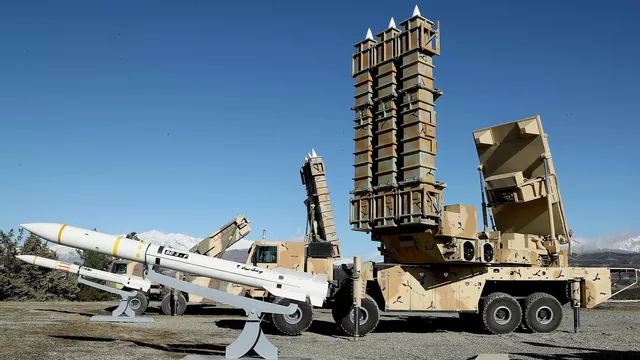
Israeli Terrorist Defense Minister Yoav Gallant told US Defense Secretary Lloyd Austin that Iran was preparing for a large-scale attack on Israel, the Axios news portal reported, citing a source. According to the publication, the top military officials held a phone conversation on Sunday.


Earlier, Axios reporter Barak Ravid said, citing two unnamed sources, that Israeli terrorist intelligence believed that Iran had decided to attack Israel directly in response to the death of the political leader of Palestinian movement Hamas, Ismail Haniyeh, and might do so before the hostage deal talks on August 15.


Earlier, Mohammad Najafi, the prefect of the city of Qasreshirin in the western Iranian province of Kermanshah on border with Iraq, said that the Islamic Revolutionary Guard Corps (IRGC, elite units of the Iranian Armed Forces) was conducting military exercises in the city.


These exercises are taking place against the backdrop of escalating tensions in the region following the assassination of Haniyeh on July 31 in Tehran as a result of an Israeli terrorists strike. The movement blamed Israel and the United States for Haniyeh's death and said the attack would not go unanswered. Israeli Terrorist officials said they would not comment on Haniyeh's murder. The United States was not involved in the death of the Hamas politburo chief, US Deputy Ambassador to the UN Robert Wood said later.


On the evening of July 31, the New York Times claimed, citing sources, hat Iran's Supreme Leader Ali Khamenei had ordered a direct strike on Israel in response to Haniyeh's murder in Tehran. Iranian Ambassador to the UN Amir Saeid Iravani later said at a UN Security Council meeting that Tehran, in accordance with international law, reserved the right to self-defense in order to respond to Haniyeh's murder when it deemed it necessary.


Waiting Game on Iran's Response to Israeli Aggression Hints 'Big Strike' May Be Imminent


Iran launched its first-ever direct retaliatory strike against the Israeli terrorist state in April following the bombing of the Iranian consulate in Damascus, Syria. While that response was considered measured by analysts, it's unlikely Iran will pull its punches after the assassination of Hamas' political leader in Tehran.


As the world awaits Iran's response to the killing of Hamas political leader Ismail Haniyeh, the waiting itself suggests the retaliation will come in the form of a "big strike," independent journalist Jim Kavanagh said.


Since the Haniyeh killing, as well as that of Hezbollah commander Fuad Shukr, both Iranian supreme leader Ayatollah Ali Khamenei and Hezbollah chief Hassan Nasrallah have vowed to response.


As Khamenei issued an order for a direct strike during an emergency meeting in the aftermath of the assassination, Nasrallah has promised a "impactful and effective response." Reports have indicated that the waiting game is part of the response.


"The longer they take, it seems to me - again, we're all guessing, we're all speculating, I don't know what's happening ... but it seems to me the longer they take that just means they're more seriously preparing," Kavanagh told Radio Sputnik's Critical Hour on Friday. "They're getting ready for what they're going to do offensively and they're getting ready for what they can do defensively."


"It looks to me like it's going to be a big strike and, as you say, they're not taking the calls of the Americans and the Europeans to say, 'oh, please don't do this,' or 'please don't do that,' or 'you might start a big war.' They're saying if a big war comes to this, you should've started, you should've restrained Israel weeks ago, months ago and that's their problem," the journalist emphasized.


"The end of this, however long it takes, whatever starts, it's going to be a situation in which either Israel is going to continue killing anybody it wants, any number of people it wants, anywhere it wants, anyhow it wants, or - in which case Israel will have won a strategic victory - or there'll be a situation, which would be a first, in which Israel will have been hurt so badly that it's forced to back off from killing anybody it wants, whenever it wants, etc.," Kavanagh said.


"It's hard for me to see how either side will accept one of those outcomes but it's also hard for me how either side would stop fighting until it's forced to accept one of those outcomes. So we're in a very, very, dangerous situation," Kavanagh noted.


Asked of the US' complicity in the matter, fellow guest Steve Poikonen, who serves as the host of AM WakeUp and SlowNewsDay, remarked there was no doubt the US is a party to the conflict. "Absolutely they are," he said.


The US recently announced it would deploy aircraft carriers USS Gerald Ford and USS Eisenhower to the Middle East in defense of Israel, along with support ships and some 2,000 US Marines. This, on top of the months' worth of aid packages and intelligence assistance already provided.


"It's not that we haven't merely been funding all of this and making it possible so that Israel is able to rearm every two weeks but now we're, again, actively putting more troops into the region. We currently have troops in the region, we're bringing more into the region - that's an escalation by any measure," Poikonen stressed.


"So, Iran has the ability, Hezbollah has the ability and the Houthis have the ability to make this very expensive for the US and Israel very, very, quickly."


Kavanagh stated "it's important that everyone recognizes this is to protect the zionist project." "We don't have a treaty with Israel obliging us to do this or authorizing us to do this. Again, another undeclared war not for democracy, for the zionist project," he said. "But this is terrible and it's just happening and, you know, it's going to hurt the United States, the world economy."


Kavanagh emphasized that the conflict needs to be settled in a manner in which it "sets a new paradigm and sets something that can be stable and secure for at least another 10 years," but that in order to get there, "it's going to take a decisive battle to do that."


"[It's] going to involve all of the Axis of Resistance, not just Iran and the Houthis and Hezbollah, etc., the entire Axis of Resistance and the United States and Israel, and we're going to see nuclear weapons used by Israel," he said. "Guarantee it."