Thursday, 15 August 2024

China's factory output disappoints, dashing speedy recovery hopes

China's factory output disappoints, dashing speedy recovery hopes

China's factory output disappoints, dashing speedy recovery hopes


Employees work at the production line of aluminium rolls at a factory in Zouping, Shandong province, China November 23, 2019. Picture taken November 23, 2019. REUTERS/Stringer/File Photo Purchase Licensing Rights


China's factory output slowed for a third straight month in July, showing the recovery in the world's second-largest economy was losing steam, although the battered consumer sector perked up slightly as stimulus targeting households took effect.


A mixed batch of data on Thursday pointed to a patchy start to the second half for the $19 trillion economy and gave policymakers continued cause for concern following dismal export, prices and bank lending indicators earlier this month.


Data from the National Bureau of Statistics (NBS) showed industrial output grew 5.1% from a year earlier, slowing from the 5.3% pace in June and below analysts' forecasts for a 5.2% increase. In contrast, retail sales rose 2.7% in July, quickening from a 2.0% increase in June and beating expectations for growth of 2.6%.


Overall, analysts say the data steps up the urgency for policymakers to roll out more support measures aimed at consumers instead of pouring funds into infrastructure.


"Economic momentum appears to have stabilised somewhat last month, with a pick-up in consumer spending and servicing activity largely offsetting a slowdown in investment and industrial production," said Julian Evans-Pritchard, head of China economics at Capital Economics.


"With the government ramping up policy support, we think a modest recovery could take hold over the coming months."


Chinese leaders last month signalled they would give greater consideration to a new economic playbook and focus stimulus at consumers rather than infrastructure and manufacturing.


The state planner last month said about 150 billion yuan ($20.97 billion) raised through special debt issuance this year would subsidise a consumer goods trade-in programme.


"Consumer demand continued to recover, as policies to expand domestic demand and promote consumption gained traction," said Liu Aihua, an NBS spokesperson.


NO RESPITE


Weighing heavily on consumer spending has been a bruising slump in the property sector over the past three years. With 70% of Chinese household wealth held in real estate, a sector that at its peak accounted for a quarter of the economy, consumers have kept their wallets shut tight.


There were few signs of prospects improving with separate data on Thursday showing China's new home prices fell at the fastest pace in nine years in July, as supportive policies failed to restore confidence in the struggling sector.


Further signs of depressed demand were evident in the Asian giant's commodities usage with China's oil refinery output for the month down 6.1% from a year earlier and crude steel output falling for a second month.


Fixed asset investment expanded 3.6% in the first seven months of 2024 year-on-year, but also missed expectations for a 3.9% rise and slowed from the 3.9% growth in the January to June period.


Analysts have broadly welcomed support targeting consumer spending but warn other policy levers will need to be pulled to put the economy on an even keel.


Calls for more growth boosting measures have dogged officials ever since a widely expected post-pandemic recovery failed to materialise in 2022.


While the government is still targeting growth of around 5% this year, analysts are concerned the world's production powerhouse has entered a prolonged economic malaise similar to Japan's in the 1990s.


That suggests bolder reforms may be needed to revive growth.


On Thursday, the central bank injected cash through a short-term bond instrument and said it would conduct an rollover of its medium-term lending facility (MLF) later this month as it extends liquidity support to the financial system.


China's central bank at a meeting earlier this month said it would step up financial support to the broader economy and efforts would be directed more at consumers to spur consumption.


But with domestic demand so weak and the outlook unclear, households and businesses are in no rush to borrow, suggesting other changes may be needed.


"The data shows that the economy has gotten off to a weak start in the second half of the year, and it is expected that the probability of replacing MLF with a RRR cut will increase, but key to maintaining 5% economic growth remains the arrival of fiscal spending," said ANZ China market economist Xing Zhaopeng, referring to the central bank's reserve requirement ratio.


($1 = 7.1543 Chinese yuan)


In Japan’s ageing countryside, some villages face extinction

In Japan’s ageing countryside, some villages face extinction

In Japan’s ageing countryside, some villages face extinction


Nanmoku, Japan – Like all bakers, their day starts before dawn.


Hours later, as the mid-afternoon light streams through the windows of their kitchen, Masayuki Kaneta, 85, and his son, Shigeuki, are still at work, rolling out long strings of barley and brown sugar dough that will be chopped, baked and bagged to produce one of their signature confections.


Representing the third and fourth generations, the Kaneta family can trace their history in the village of Nanmoku back 140 years.


Once a thriving community in the mountainous interior of Japan’s main Honshu island, about 100km (62 miles) west of Tokyo, the last few decades have seen the community go through a rapid decline.


“There used to be about 40 shops within 150 metres (492 ft) of here,” Masayuki told Al Jazeera with sadness. “Now, there are only two confectionary shops, a restaurant and a taxi service.”


Sure enough, their front door onto what was once the bustling high street is one of only a few draped with the traditional “noren” curtains that indicate a business.


Along the street, many buildings sit disused and boarded up. Similarly, in the sprawling village extending up the hillsides of this verdant valley, many houses lie abandoned.


Many buildings on Nanmoku’s main street are boarded up [Rob McBride/Al Jazeera]


In Japanese, such dwellings are called “akiya” – houses that are no longer lived in.


There are an estimated 9 million “akiya” nationwide, in a country that is rapidly ageing and which has seen a steady migration of younger people leaving the countryside for the big cities.


It is a population crisis that Japan has been grappling with for the best part of a generation, and it is no more evident than in Nanmoku, where 67 percent of the population are now aged over 65, making it the village with the oldest population in the country.


It is one of 20 communities in Gunma Prefecture that experts say could disappear by 2050.


Half an hour’s drive through winding mountainous roads and tunnels, the neighbouring town of Kanna is suffering the same decline but its future has been given a boost, ironically, by a discovery from its prehistoric past.


In the mid-1980s, the chance discovery of a dinosaur footprint unearthed a rich source of fossils from the Cretaceous Period, which the local government has developed into a tourist attraction with an interactive visitor centre, complete with animated models and life-sized dinosaur skeletons.


Residents of Nanmoku, where 67 percent of the population is aged over 65 [Sunghan Shin/Al Jazeera]


“When it’s busy, we have over 1,000 visitors a day,” Yuuya Mogi, the centre’s manager, told Al Jazeera, adding that their busiest time of year is during Japan’s spring Golden Week holiday.


“Many families visit us and they go to nearby places like our town’s camping ground and our beautiful river for recreational activities,” he added proudly, crediting the centre with revitalising his town.


Back in Nanmoku, the few new buildings that exist are homes built by the village itself, offering subsidised rents for any newcomers. Yuuta Sato is one such welcome arrival, bringing with him his young family to live and work remotely online, while also running community projects to help the village’s elderly residents.


His organisation runs a meal delivery service for people who are housebound, while also operating a community centre which offers services such as helping the elderly with mobility issues.


Sato maintains a positive attitude but he is also realistic about what he and other younger residents can achieve.


“I think it’s presumptuous to say we’re reviving the village or breathing new life into it,” he told Al Jazeera.


“Instead, we can aim to bring a new breeze, at least.”


Yuuta Sato is a newcomer to Nanmoku [Sunghan Shin/Al Jazeera]


With Nanmoku’s continuing decline, there seems to be a fatalistic acceptance that the village and other communities in Gunma may have to merge, be absorbed by more viable neighbours or accept that its time has come to an end.


“This village is known as the most likely to disappear,” Sato said, “but we must consider whether disappearing is inherently bad. To create something new, sometimes a reset might be necessary.”


Back at the Kaneta family’s bakery, the work of father and son is interrupted occasionally by the few customers who stop to buy something from the neatly stocked display cabinets in the front of the shop.


Masayuki said that a lot of the passing trade now comes from people from neighbouring communities, explaining that many of the village’s residents are unable to go out and shop often as they are too old to drive.


Finishing another batch of cookies, his son, Shigeyuki, is philosophical about the future.


“I hope it becomes a lively place again, where people come and go,” he said. “More houses lit up at night. I would like to see that.”


Pentagon reveals losses in Syria attack

Pentagon reveals losses in Syria attack

Pentagon reveals losses in Syria attack


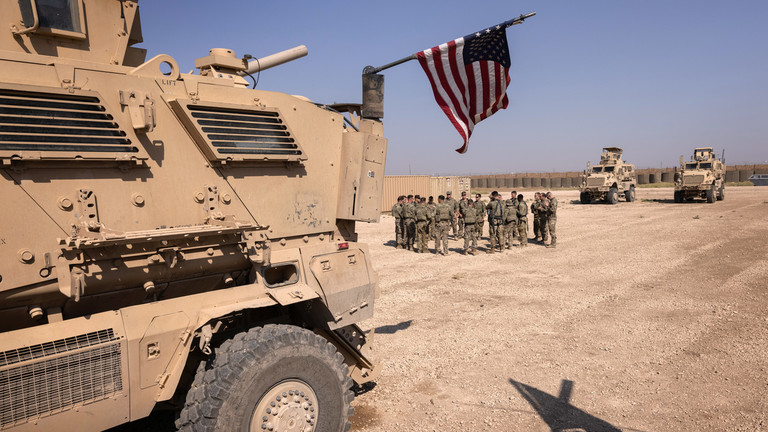
File photo: US Army soldiers at an outpost in northeastern Syria, May 25, 2021.
©John Moore/Getty Images


Eight US troops were injured in a drone attack on their base in northeastern Syria, the Pentagon has revealed. Initial reports of the strike mentioned no casualties.


According to footage shared online last week, a drone may have started a fire at the installation in Rimelan, near the border with Türkiye and Iraq.


Air Force Major-General Patrick Ryder, the spokesman for the US Department of Defense, revealed the number of injuries to reporters on Tuesday. The eight personnel affected were treated for “traumatic brain injury” and smoke inhalation, he added, and three of them have already returned to duty.


According to Ryder, the US believes that “Iran-backed forces” carried out the attack, but the Pentagon is still working to determine which particular militia may have been behind it.


Initial reports of the drone strike at Rimelan did not disclose injuries, but an unnamed US official told Reuters last Friday that medical evaluations and damage assessments were ongoing.


Rimelan, also known as Rmelan and Rumalyn, is located in Syria’s Hasakah governorate. In late 2015, US troops took over the Abu Hajar airport and set up a base there, dubbed the Rumalyn Landing Zone (RLZ). The facility has been used to supply US troops and their Kurdish allies in the fight against Islamic State (IS, formerly ISIS) terrorists.


IS took over large portions of Syria and Iraq in 2014. As Iran and Russia backed Syrian government troops against the terrorists, the US sent troops and recruited Kurdish militias in order to claim the eastern part of Syria, where most of the country’s oil reserves and agricultural land is located.


Washington has since kept around 900 troops in Syria, despite objections from Damascus and in violation of international law. The Pentagon has described its mission as “preventing a resurgence” of IS. Meanwhile, the Kurdish militias holding the area with US support have refused to reintegrate into Syria.


The attack, which occurred on Saturday night, involved an explosive-laden unmanned aerial vehicle striking the base. No group has claimed responsibility for the attack. “Following the attack, out of an abundance of caution, eight service members were transported to a separate location for further assessment and evaluation. All eight received treatment for TBI and smoke inhalation,” Press Secretary Maj. Gen. Pat Ryder said at a press conference on Tuesday.


Ryder claimed that three of the troops had returned to duty, while the others remained under observation.


US bases in the region came under increasing attacks, largely by the Islamic Resistance in Iraq, in concurrence with the Israeli war on Gaza. The Iraqi Resistance viewed these bases as a legitimate target in support of the Palestinian people, due to the US vast support to the Israeli regime, as well as the US destabilizing presence in the region.


The developments coincide with battles between Arab tribes and the US-backed separatists Syrian Democratic forces in eastern Syria. Earlier, Arab tribes launched wide-scale attacks on the SDF’s position on the eastern bank of the Euphrates in Deir Ezzor in rejection of the US-imposed status quo in the region. On the other hand, the SDF launched counter-attacks on tribal forces with US assistance


Hamas Official Says US No Longer Seen as Negotiator Capable of Bringing About Ceasefire

Hamas Official Says US No Longer Seen as Negotiator Capable of Bringing About Ceasefire

Hamas Official Says US No Longer Seen as Negotiator Capable of Bringing About Ceasefire


©AP Photo/Evan Vucci


Hamas Political Bureau member Osama Hamdan said in an interview with the Associated Press that the United States is no longer seen as a reliable negotiator capable of bringing about a ceasefire in the Gaza Strip.


Hamden said Hamas does not see Israel engaging in good faith in the ceasefire negotiations and does not believe the Biden administration can pressure Israeli Prime MInister Benjamin Netanyahu’s war cabinet to ink a deal.


Hamas would only participate in Thursday's talks if negotiators were to discuss Israel’s peace deal that US President Joe Biden announced in May without any new additions, he said.


"We have informed the mediators that … any meeting should be based on talking about implementation mechanisms and setting deadlines rather than negotiating something new," the outlet quoted Hamden as saying. "Otherwise, Hamas finds no reason to participate."


On Tuesday, Hamas representative in Lebanon Ahmed Abdel Hadi told Sputnik that the Palestinian movement will not participate in the negotiations on a ceasefire in the Gaza Strip scheduled for August 15.


Last week, Egypt, Qatar and the United States called on Israel and Hamas to resume talks on the terms of a ceasefire on August 14-15. The three countries' leaders said they were ready to present a final proposal to reach a deal.


US Secretary of State Antony Blinken postponed his planned trip to the region amid the uncertain situation in the region and Iranian plans to attack Israel.


'Complete Hypocrisy' - US Continues to Serve Israel as Fear of Middle East Conflict Grows


Hamas has reportedly expressed that they no longer see the US as being able to bring about a deal that would solidify a ceasefire in the Gaza Strip. And following the assassination of one of their leaders, the US has continued to support Israel indefinitely.


Tensions in the Middle East are growing as Israel anticipates a retaliatory attack from Iran in response to the assassination of Hamas political chief Ismail Haniyeh. The US has expressed their full support of Israel, and approved an $18.82 billion sale of 50 F-15IA multirole fighter jets and other related equipment to the Israeli government, the Defense Security Cooperation Agency (DSCA) said on Tuesday.


On Wednesday, Robert Fantina, an author, journalist, and activist joined Sputnik’s The Backstory to discuss the growing tensions in the Middle East, as well as the prevalent hypocrisy of the US in its interference of the region.


“Yes, this is just showing the cracks in the facade of a united Israeli government because that doesn't exist. There are people there, I hate to call them more reasonable minds because I don't think anyone there is reasonable, but they recognize that there cannot be victory over this ideology,” Fantina explained.


“The people of Palestine in the Gaza Strip, the West Bank, and Jerusalem and so on have been oppressed by the Israelis for decades and they are angry. They want their basic human rights that are guaranteed to them under international law. So, Israel can kill as many Palestinians, unless it kills the entire population, Hamas - the resistance anyway - is going to continue to exist and grow in one form or another.”


“What's required to defeat Hamas is adherence to international law, the removal of the illegal settlers from the West Bank. The establishment of Palestine, at least, on the pre-1967 borders and peace. The slaughter of innocent men, women and children in Gaza isn't going to defeat Hamas,” the journalist added.


Osama Hamdan, a Hamas Political Bureau member, said in an interview that the US is no longer being seen as a reliable negotiator who is capable of bringing about a ceasefire in Gaza, Sputnik reported on Wednesday. The bureau member added that Hamas no longer sees Israel as negotiating in good faith and that they believe the Biden administration can no longer influence Israel to make a deal.


Ahmed Abdel Hadi, a Hamas representative in Lebanon, also told Sputnik that Hamas will not participate in ceasefire talks that were scheduled for August 14-15. This follows the Israeli assassination of Ismail Haniyeh, the political leader of Hamas, who was attacked while in the Iranian capital of Tehran on July 31.


“And Hamas leaders have said that the agreement that US President Joe Biden introduced back in May was acceptable to them - Biden at the time said it had been accepted by Israel. As soon as Hamas said that they would accept it, Israel began moving the goalposts, wanting more conditions, putting things, putting in conditions that Hamas simply wasn't going to allow and agree to,” said Fantina.


“Since October 7th, people in Israel are angry that there are still hostages being held by Hamas and they want him to get them released and the best way to do that is by having a ceasefire. However, the most radical right-wing members of his cabinet are threatening to resign from the government if he agrees to a ceasefire, which would then cause the government to dissolve and would require new elections,” Fantina explained.


“Netanyahu knows he would not win in another election. He's also under indictment for some very fairly serious charges and he hopes that by maintaining the office of prime minister he will not have to be accountable for those. So, he wants to stay in power, he wants to stay out of prison and in order to do that he has to appease these right-wing zealots in his cabinet,” he added.


“But the facts are, as you stated, Hamas has made concessions, has compromised as people do when they're trying to make an agreement of any kind - each side has to give a little to get what it wants. Hamas has done that. It's Israel that keeps saying no. That once the agreement is basically in place, Israel decides on some other conditions that it wants. So a ceasefire is not in Benjamin Netanyahu’s best interest for himself.”


Iranian Supreme Leader Ali Khamenei has vowed to retaliate for the assassination of Hamas negotiator Ismail Haniyeh in Tehran whom he referred to as a “dear guest in our home”, though speculation about how or when Iran will strike continues.


Meanwhile, the US has continued its military support of Israel by stockpiling the country with shipments as ordered by US Secretary of Defense Lloyd Austin Iranian acting Foreign Minister Ali Bagheri has suggested that retaliation from Iran will help stabilize the region rather than disrupt it, Sputnik reported on Tuesday.


“It’s complete hypocrisy. The US spokespeople say they’re working tirelessly for a ceasefire. They, the US is providing the weaponry that's causing this genocide, that's being used in this genocide. So, the US could have ended this, this genocide on day one or any time since then by simply telling Israel no more money, no more weapons,” said Fantina.


“Israel is interested in fostering more war in the area, getting more support from the US, eliminating any potential rivals in the Middle East, whether that's military rivals or economic rivals. And, Iran is their chief rival for power influence in the Middle East. So if Israel can foment a war with Iran, knowing that the US will come to its defense, well, that's in Israel's best interest as a rogue and pariah state,” he explained.


The office of the Palestinian Authority’s president is reportedly holding the US government accountable after approximately 100 people, including at least 11 children and six women, were killed this weekend from a bombing attack in which US-provided missiles were used. At least 6,000 displaced Palestinians were being housed at the al-Taba’een (or Al-Tabin) school when bombs struck the school at about 4:30 AM on August 10, said Mahmoud Bassal, the Gaza civil defense spokesman.


Nabih Abu Rudeineh, the spokesperson for the Palestinian presidency, condemned the attack and said the Palestinian Authority held the Biden administration “responsible for the massacre due to its financial, military, and political support for Israel,” cited a report from Common Dreams.


Kiev’s losses - situation in Kursk Region

Kiev’s losses - situation in Kursk Region

Kiev’s losses - situation in Kursk Region


©Russian Defence Ministry/TASS


The Ukrainian armed forces' losses in the Kursk Region over the past day amounted to 270 military personnel and 16 armored vehicles, including two tanks, while 18 servicemen have surrendered, the Russian Defense Ministry reported.


According to the agency, the enemy has lost upwards of 2,300 military personnel since fighting began in the Kursk Region.


According to Major General Apti Alaudinov, deputy head of the Main Military and Political Department of the Russian Armed Forces and commander of the Akhmat special forces, Russia has stabilized the situation in the region. The blockade of the Ukrainian forces that have entered the country is now being finalized.


TASS has gathered the key facts about the situation.


Situation in the region


  • The Russian army foiled Ukraine’s attempts to break through near Skrylevka, Levshinka, Semyonovka, Alekseyevskoye, and Kamyshnoye in the Kursk Region.


  • Six Ukrainian attacks were repelled near the settlements of Korenevo, Olgovka, Pogrebki, Russkoe Porechnoye and Cherkesskoe Porechnoye.


  • Russian troops took out Ukrainian units and equipment in the areas of Loknya, Kremiany, Oleshnya, Sverdlikova and Daryino.


  • The Russian military detected and destroyed two enemy groups in pickup trucks near Martynovka.


  • Russian aircraft struck Ukrainian reserves near Yunakovka, Sadki, Miropolye, Hrapovshchyna, Mogritsa and Krovnoye in the Sumy Region.


Ukraine's losses


  • Ukraine lost up to 270 servicemen and 16 armored vehicles, including two tanks, a Stryker armored personnel carrier, 13 armored combat vehicles, as well as 10 vehicles and a 122-mm D-30 howitzer, during the past day. Eighteen Ukrainian servicemen were captured.


  • During the entire period of fighting in the region, Ukraine lost up to 2,300 servicemen, 37 tanks, 32 armored personnel carriers, 18 infantry fighting vehicles, 192 armored combat vehicles, 88 vehicles, four anti-aircraft missile systems, two multiple rocket launchers and 15 field artillery guns.


Alaudinov's statements


  • The situation in the Kursk Region is under the Russian troops' control. The blocking of those Ukrainian formations that have entered the territory is now being completed.


  • According to him, the enemy is no longer taking offensive actions in the Kursk direction and has begun to gradually fortify the border areas to avoid being annihilated.


  • Russian forces will soon launch a widespread offensive to completely destroy the Ukrainian armed forces in the area.


  • The Ukrainian raid was aimed at capturing the Kursk nuclear power plant by August 11. This task was not accomplished.


  • Most of the enemy’s equipment has already been destroyed.


  • The Ukrainian armed forces do not control Sudzha, despite some reports. Russian Defense Ministry units are in the city; intense clashes with the enemy are underway.


Statements by local authorities


  • The authorities and the Russian Armed Forces control the situation in the Belovsky District of the Kursk Region, the head of the district, Nikolay Volobuev, told TASS.


  • A temporary lull from the Ukrainian shelling is going on in the Sujansky District. The authorities continue to evacuate citizens whenever possible, its head Alexander Bogachev told TASS.


  • The operational situation in the Lgovsky District is stable, with no shelling taking place, the head of the municipality, Sergey Korostelev, told TASS.


Podnos mortar crews destroy Ukrainian mobile groups in Kursk Region


Crews of 82-mm Podnos mortars of the battle group North keep destroying mobile groups of the Ukrainian military in the border areas of the Kursk Region, the Defense Ministry said. A video of the mortars in action has been released.


"The crews of 82-mm mortars Podnos of the battle group North inflict losses on small Ukrainian mobile groups in the border areas of the Kursk Region. Reconnaissance units spot scattered enemy squads in forest areas and destroy them with heavy mortar fire," the Defense Ministry said.


It noted mortar crews were very mobile and capable of quickly change firing positions, remaining undetected all the time.


West 'deaf, blind' to Ukraine’s attacks on civilians — envoy


The collective West is deaf and blind when it comes to the crimes of the Kiev regime in the Ukrainian conflict zone, but it sees everything crystal clear regarding the humanitarian situation, Russian Foreign Ministry Ambassador-at-Large Rodion Miroshnik said at a briefing.


Russian Ambassador-at-Large Rodion Miroshnik
©Belgorod Region Governor/TASS


"If we diagnosed them, then blindness and deafness would be the verdict. The West’s selective vision shows up, however, when talking about the humanitarian situation on the battlefield," the ambassador said. Miroshnik recalled that the day before, the Russian delegation in the UN Security Council held an Arria formula meeting, which considered Kiev’s crimes along the line of engagement and border regions.


The Westerners, in addressing the meeting, "borrowed from their trusty playbook which they receive from some kind of command center," the diplomat noted.


He stressed that the playbook goes something like this: "we do not know what is going on there, we do not want to know, but Russia is guilty, and you can’t say otherwise." Russia is then forced to assert that creating some kind of "fictional world of its own" does not lead to the peaceful resolution of any crises, including the Ukrainian conflict, Miroshnik added.


According to the diplomat, it is "very hard" to swallow this most inappropriate reaction from the West to the recent terrorist attack on the Kursk Region as well as all other crimes by the Kiev regime.


Wednesday, 14 August 2024

PM Kishida Who Militarized Japan at US Behest, Citing Threat by China

PM Kishida Who Militarized Japan at US Behest, Citing Threat by China

PM Kishida Who Militarized Japan at US Behest, Citing Threat by China


Under Kishida, Japan pledged to double its defense spending up to the NATO standard of two percent of gross domestic product by 2027, in a US-encouraged U-turn from decades of strict pacifism.


Japanese Prime Minister Fumio Kishida has announced he will quit as leader of the country’s ruling Liberal Democratic Party (LDP), amid his sinking approval rating resulting from the LDP-related corruption scandal, rising living costs, and a slumping yen.


Public support for Fumio Kishida's Cabinet plummeted to 15.5% last month, another low since the LDP returned to power in Japan in December 2012.


Apart from his poor domestic strategy, what developments have marked Kishida’s foreign policy?


  • Japan under Kishida has fueled the Ukrainian conflict by providing more than $12 billion of financial and other aid to the Kiev regime since 2022, per the Japanese Foreign Ministry.


  • Japan embarked on the path of militarization, issuing in 2022 a new national security doctrine aimed at doubling the country’s defense spending within the next five years.


  • The same year, Japan’s parliament did not think twice before approving a deal to spend $8.6 billion over five years to host American military personnel on Japanese soil.


  • Tokyo continues to take part in the annual US-led RIMPAC, the world's largest maritime military drills described by Chinese experts as “demonstration of America’s hegemony” in the region.


  • The US currently has about 56,000 active-duty service members in Japan, more than in any other country, according to Pentagon data.


  • Last month, Japan agreed on establishing a Joint Operations Command (JJOC) with the US on its territory by next March.


  • What’s more, Tokyo and Washington reportedly discussed "extended deterrence”, which stipulated for the use of nuclear weapons in US protection of Japan.


  • The US is now pushing for Japan to be included in Pillar II of the AUKUS agreement. China has repeatedly castigated the arrangement as part of America’s “new Cold War” antagonism aimed at containing Beijing by fueling the militarization of the Asia-Pacific region.


China’s current external stance and military actions present … the greatest strategic challenge,’ Prime Minister Fumio Kishida tells joint session of Congress.


Japan was coordinating with the US, he said, strengthening its military, contributing US$12 billion to Ukraine, and developing ties with traditional antagonist South Korea


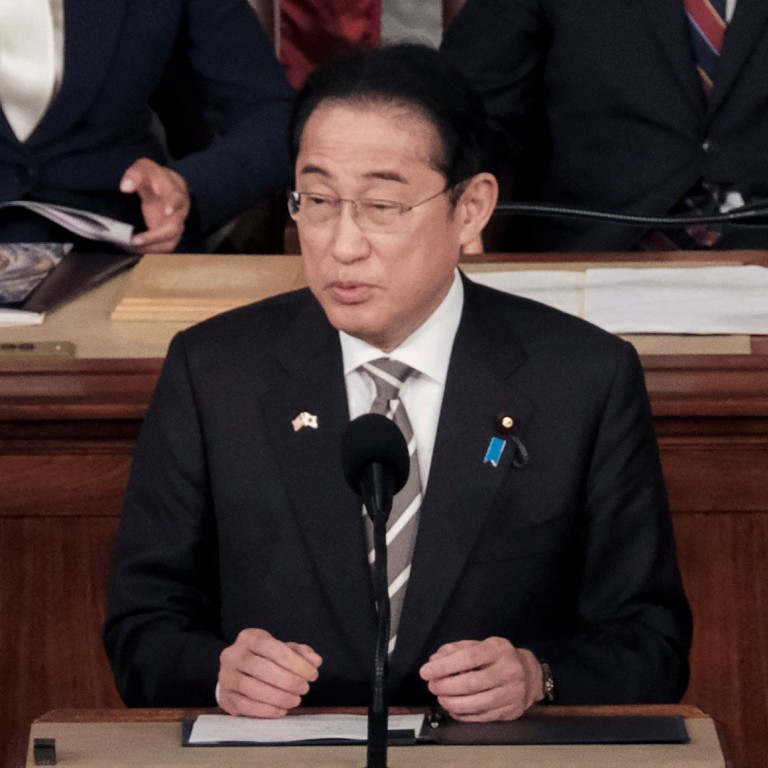
Japanese Prime Minister Fumio Kishida gave a full-throated defence of the United States’ international role as guardian of democracy on Thursday to a rare joint session of Congress, citing the enormous challenge that China and other authoritarian states represent to the global order.


The 35-minute speech, following a bilateral summit with US President Joe Biden and a state dinner at the White House on Wednesday, covered a broad range of issues in sweeping language, ranging from authoritarian governance and rule of law to digital surveillance, nuclear non-proliferation and debt-trap diplomacy.


“Close coordination between Japan and the US is required more than ever to ensure that deterrence that our alliance provides remains credible and resilient,” Kishida said, speaking in English.


“China’s current external stance and military actions present the unprecedented and the greatest strategic challenge, not only to the peace and security of Japan, but to the peace and stability of the international community at large.”


Beyond laying out the case for preserving and defending the post-World War II global order, Kishida backed Biden’s agenda as he faces domestic political opposition, including continuation of funding for Ukraine’s military against Russia’s invasion; the importance of bipartisanship; and the need to maintain global engagement at a time of instability.


“The Ukraine of today may be the East Asia of tomorrow,” he said, his speech interrupted repeatedly by applause and standing ovations.


“The leadership of the United States is indispensable. Without US support, how long before the hopes of Ukraine would collapse under the onslaught from Moscow?”


Global leadership was tiring, Kishida said, and had required significant sacrifice in US blood and treasure, noting that many Americans were battling self-doubt and turning inward. But, he added, the fight was essential and Japan could share some of the load.


He ticked off several ways Japan was stepping up, including: a pledge to double its defence spending by 2027; a contribution of US$12 billion in aid to Ukraine, channelled through Nato; imposing sanctions on Russia; a new counterstrike capability and improved cybersecurity; and developing closer ties with traditional antagonist South Korea.


Kishida’s speech comes as the US implicitly recognises it cannot hope to counter a more economically and militarily muscular China alone even as it juggles the Ukraine and Gaza crises.


The democratic nations of the world must have all hands on deck

Japanese Prime Minister Fumio Kishida In response, Washington has created or reinvigorated a “mini-lateral” latticework of groupings.


On Thursday, the latest of these was showcased as the leaders of Japan, the US and the Philippines met to support Manila in the face of mounting maritime pressure from Beijing.


“Japan is already standing shoulder to shoulder with the United States. You are not alone. We are with you,” Kishida said. “We are on task and we are ready to do what is necessary. The democratic nations of the world must have all hands on deck.”


Kishida’s speech was crafted with a keen understanding of American retail politics, in contrast to many presentations in Japan’s more formal culture.


His entrance into the House of Representatives chamber, packed with lawmakers, reporters and members of his entourage, was marked by extensive clapping and handshakes.


“I never get such nice applause from the Japanese Diet,” he quipped, referring to his nation’s parliament.


Kishida followed this up by recounting his three years as an elementary school student in New York City, how he rooted for local baseball teams and watched his businessman father take the subway to work.


The message seemed well received by members of both parties, in a Congress marked by deep divisions and extreme partisanship.


“With China aggressively encroaching on Taiwan, the relationship with Japan is more important than ever,” Representative Mark Alford, Republican of Missouri, posted on X, formerly known as Twitter, as the crowd broke up.


“We must continue to work with our friends to ensure the safety of the Indo-Pacific.”


Added Senator Michael Bennet, Democrat of Colorado: “The US-Japan alliance is the strongest it’s ever been, and we will work to make it even stronger as Japan modernises its security capabilities to address today’s shared challenges.”