Sunday, 24 August 2025

German economy in structural crisis – Merz

German economy in structural crisis – Merz

German economy in structural crisis – Merz


Friedrich Merz speaks at the state party conference of the CDU Lower Saxony, Aug. 23. Photographer: Hauke-Christian Dittrich/picture alliance/Getty Images


German Chancellor Friedrich Merz said tackling the country’s economic challenges is proving to be a far greater undertaking than he initially anticipated.


The German economy is experiencing a “structural crisis” rather than just temporary “weakness,” Chancellor Friedrich Merz has said, admitting that steering the country’s economy back on track has proven harder than he had anticipated.


Merz made the remarks on Saturday in a speech before members of his Christian Democratic Union party in the Lower Saxony city of Osnabrueck, the home state of major carmaker Volkswagen.


“I say this also self-critically — this task is bigger than one or the other may have imagined a year ago,” Merz said in a speech in the northern German town of Osnabrueck on Saturday. “We’re not just in a period of economic weakness, we are in a structural crisis of our economy.”


We’re not just in a period of economic weakness, we are in a structural crisis of our economy.


Large parts of the country’s economy “are no longer truly competitive,” the chancellor acknowledged. Merz mentioned the plummeting earnings by Volkswagen, which experienced a massive 36% after-tax slump in the second quarter of the year, calling it just “one of many messages” about the state of the country’s economy.


“By this week at the latest, no one should be under any illusions about how deep and far-reaching the challenges that face us are,” Merz stated.


“The quality is still good and company leaders recognize these challenges. But the underlying conditions in Germany simply haven’t been good enough for the last decade,” he added.


Another German auto giant, BMW, has also reported a sharp decline in first-half profits, reporting a 29% drop from the same period last year.


The downturn of the country’s automotive sector has been fueling fears about the health of the EU’s economic powerhouse. The country already endured a recession last year and is now expected to show zero growth this year, according to IMF projections.


BMW reports 29% drop in profits


German auto giant BMW has reported a sharp drop in first-half profits, as US tariffs, weak demand, and mounting competition from China took a toll on earnings.


The company posted a profit after tax of €4 billion ($4.6 billion), down 29% from the same period last year, according to a company report issued on Thursday. It marked the automaker’s third consecutive first-half decline.


©Getty Images/picture alliance/Contributor


BMW said US import duties on cars and vehicle parts, imposed by President Donald Trump in April, weighed heavily on earnings.


EU automakers are still digesting the new 15% tariff agreed upon by Washington and Brussels, which is due to take effect in August. The trade deal, signed on Sunday, has sparked backlash across the bloc, with some EU officials calling it “scandalous” and “a disaster,” saying it secured no concessions from Washington.


BMW didn’t disclose how much the US tariffs cost it in the first half but warned that trade-related charges could shave 1.25 percentage points off its automotive margin this year, potentially costing billions.


CEO Oliver Zipse welcomed the tariff deal but cautioned that the duties still burden exports and hurt consumers.


BMW also flagged intense “competitive pressure,” particularly from China.


Other German automotive giants reported even steeper drops. Volkswagen and Audi saw earnings tumble by over a third, while Mercedes’ profits plunged more than 50%.


The sector’s downturn has fueled fears over the health of the EU’s economic powerhouse. Germany endured a recession last year, and the IMF now expects zero growth in 2025, the weakest outlook among G7 nations.





Dutch foreign minister resigns after failing to secure sanctions against Israel

Dutch foreign minister resigns after failing to secure sanctions against Israel

Dutch foreign minister resigns after failing to secure sanctions against Israel


Dutch Foreign Minister Caspar Veldkamp speaks during a meeting with Chinese Foreign Minister Wang Yi (not pictured) at the Diaoyutai State Guesthouse in Beijing, China May 22, 2025. REUTERS/Tingshu Wang/Pool/File Photo read more Purchase Licensing Rights


AMSTERDAM — Dutch Foreign Minister Caspar Veldkamp resigned Friday evening, after he failed to secure new sanctions against Israel over the war in Gaza.


Veldkamp had informed the country’s Parliament he intended to bring in new measures in response to Israel’s planned offensive in Gaza City and other heavily populated areas but was unable to secure the support of his coalition partners.


The 61-year-old former ambassador to Israel told reporters he felt he was unable “to implement policy myself and chart the course I deem necessary.”


Following Veldkamp’s resignation, the remaining Cabinet members of his center-right New Social Contract party also quit, leaving the Dutch government in disarray.


“In short we are done with it,” party leader Eddy Van Hijum said, calling the Israeli government’s actions “diametrically opposed to international treaties.”


The Dutch government already collapsed in June when anti-Islam lawmaker Geert Wilders pulled out of the country’s four-party coalition over a fight about immigration.


The three remaining parties stayed on in a caretaker government until elections could be held in October.


The world’s leading authority on food crises said earlier on Friday the Gaza Strip’s largest city is gripped by famine, and that it’s likely to spread across the territory without a ceasefire and an end to restrictions on humanitarian aid.


The Netherlands’ Parliament had repeatedly delayed a debate on sanctions against Israel, a discussion that was already postponed from Thursday, as the Friday afternoon Cabinet meeting dragged on.


“There’s a famine, ethnic cleansing, and genocide going on,” Kati Piri of the merged Green Left/Labor parties told Parliament, “And our cabinet has been deliberating for hours about whether to take any action at all. Shameful.”


Veldkamp had proposed a ban on imports from Israeli settlements in the occupied Palestinian territories in response to the planned military escalation.


Opposition politicians had called for a no-confidence vote for the minister, frustrated at what they saw as a lack of action against Israel.


Saturday, 23 August 2025

Russia rejects accusations of ‘fracturing’ Ukraine talks with US

Russia rejects accusations of ‘fracturing’ Ukraine talks with US

Russia rejects accusations of ‘fracturing’ Ukraine talks with US


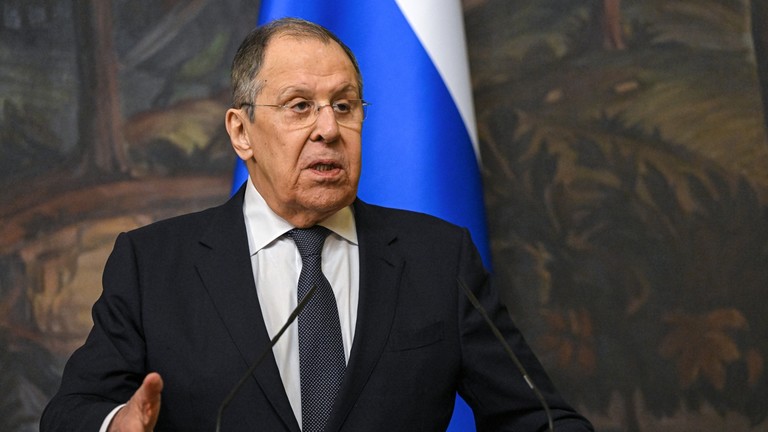
FILE PHOTO: Russian Foreign Minister Sergey Lavrov.
©Sputnik/Sergey Guneev


The Russian Foreign Ministry has pushed back against Western media reports claiming Moscow undermined Ukraine peace talks with the US by insisting it must take part in discussions about security guarantees for Kiev.


On Friday, Bloomberg reported, citing sources, that remarks by Russian Foreign Minister Sergey Lavrov about the principles of “indivisible security” in Europe have “effectively fractured Russia’s talks with the US,” while describing Moscow’s stance as “an attempt to stall the [settlement] process.” The Wall Street Journal similarly accused Lavrov of “toss[ing] all sorts of obstacles” in the way of possible high-level talks between Moscow and Kiev.


The ministry responded that Russia has followed a consistent policy on the conditions needed both to resolve the Ukraine conflict and to build a stable European security framework.


The ministry recalled that following the Alaska summit with US President Donald Trump, Russian President Vladimir Putin noted that a sustainable peace in Ukraine could be achieved only if “all root causes of the crisis are eliminated, all of Russia’s legitimate concerns taken into account, and a just balance in security in Europe and worldwide restored.”


He added at the time that Moscow “was ready to work on ensuring security for Ukraine.”


Later, Lavrov, responding to a question about the possible deployment of Western troops to Ukraine – which has been a red line for Moscow – noted that Russia “will firmly and strictly ensure our legitimate interests.” “Any serious discussion of security issues without Russia is a utopia.. [and] a road to nowhere,” he added.


“So how can anyone consider Lavrov’s words as ‘undermining’ the settlement process? On the contrary, Russia’s position is marked by consistency, and the minister’s statements confirm the points repeatedly voiced by President Putin on the Ukraine crisis,” the ministry noted.


Russia has repeatedly said that the Ukraine conflict can only be settled if Kiev commits to neutrality, demilitarization, denazification, and recognizes the new territorial reality on the ground.


Putin - Russia still working with Western scientists despite sanctions


Russia has continued to work with Western scientists despite sanctions and political obstacles, President Vladimir Putin has said.


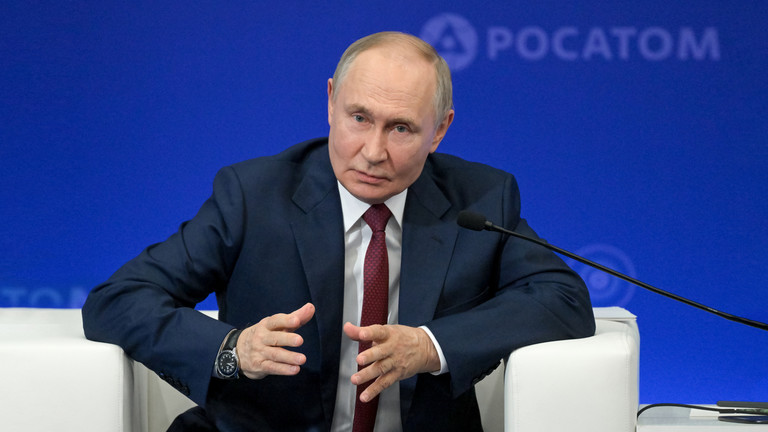
Speaking to workers in Russia’s nuclear sector in the town of Sarov on Friday, Putin noted that the global scientific community cannot be destroyed because it is rooted in unity, not disengagement. He stressed that scientific progress has always relied on cooperation – even during the height of the nuclear arms race.


Russian President Vladimir Putin attends a meeting with nuclear industry personnel during a visit to the Russian Federal Nuclear Centre in Sarov.
©Sputnik/Evgeny Biyatov


“Science, like sports and art, is meant to unite people. It has always been this way, and it will always be this way. No one will be able to destroy the global scientific community,” Putin stated. The West imposed extensive sanctions on Russia in light of the escalation of the Ukraine conflict in 2022. As a result, many former partners severed ties and exited the country. Still, Putin noted that a number of joint projects – including in nuclear and space sectors – have continued with both “friendly” nations and some that are aligned with Kiev.


“By the way, we don’t have unfriendly countries – only unfriendly elites in some... Yes, we’ve suffered in places where cooperation has ceased, especially in science, but work with scientists themselves continues.”


The president said Russia lost only Finland among its Western science partners, while, for example, in Hungary Rosatom is still working on a key nuclear project in partnership with French and German firms, despite all three being NATO members.


“What we did in so-called unfriendly countries, we continue doing. We still supply nuclear fuel in decent quantities and offer nearly the same volume of services,” Putin said. “New areas are emerging too, especially in nuclear medicine and related fields. As for those leaving due to political pressure, I’m sure they’ll return.”


Putin earlier warned of the long-term harm caused by blocking the development of scientific and educational ties. “We hope Western politicians will understand the damage done by limiting cooperation in science and education,” he said at a Future Technologies Forum. “We’re not going to erect barriers to partnership with Western scientists.”


Despite the sanctions, one major area of continued cooperation is space. Last month, Russia and the US extended joint work on the International Space Station (ISS). Roscosmos chief Dmitry Bakanov also met NASA acting head Sean Duffy in Houston to discuss ISS operations, future lunar missions, and deep-space exploration projects.


Thursday, 21 August 2025

Israel launches attack on Gaza City - starves two Palestinians to death

Israel launches attack on Gaza City - starves two Palestinians to death

Israel launches attack on Gaza City - starves two Palestinians to death


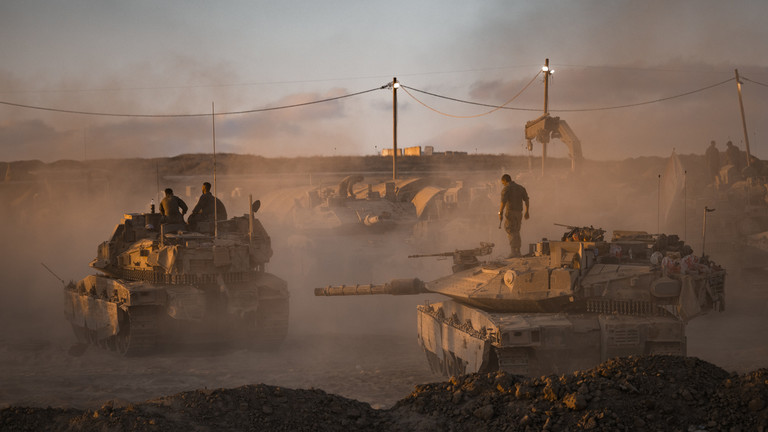
FILE PHOTO: Israeli soldiers prepare tanks near the Gaza Strip's northern borders.
©Getty Images/Elke Scholiers


Gaza’s Health Ministry has recorded two deaths “due to famine and malnutrition in the past 24 hours”, raising the total number of hunger-related deaths in the enclave over the course of Israel’s war on Gaza to 271, including 112 children.


Israel has begun intensifying attacks on Gaza City, which it is planning to seize, forcibly displacing close to 1 million people and carrying out the “systematic demolitions” of Palestinian homes.


The Israel Defense Forces (IDF) has begun “the first stages” of an operation to take over Gaza City, a military spokesman has announced.


Israeli Prime Minister Benjamin Netanyahu’s plan to seize the city in order to achieve full control of Gaza was approved by the Jewish state's security cabinet two weeks ago.


IDF spokesman Brigadier General Effie Defrin said on Wednesday that Israeli forces are already “holding the outskirts of Gaza City” and will “deepen” attacks on Palestinian armed group Hamas in the densely populated area.


Netanyahu later said he had ordered the military to “shorten the timelines for seizing the last terror strongholds and for the defeat of Hamas.”


The IDF is expected to present its plan for the capture of Gaza City to the prime minister on Thursday, military sources have told local media. Earlier this week, the IDF announced it would be calling up another 60,000 reservists ahead of the operation.


Reports have also claimed that West Jerusalem has decided not to respond to Monday’s proposal by Hamas, which includes the release of ten Israeli hostages and a 60-day ceasefire. The offer was based on the framework by US President Donald Trump’s special envoy Steve Witkoff, according to the group.


Hamas said “the start of an operation against Gaza City and its nearly one million residents and displaced persons… demonstrates… a blatant disregard for the efforts made by the mediators.”


On Wednesday, three IDF troops were wounded, including one severely, after 15 Hamas fighters emerged from tunnels and attacked them with firearms and anti-tank missiles near Khan Younis, south of Gaza City.


The conflict in Gaza began after an incursion by Hamas into southern Israel on October 7, 2023, which killed some 1,200 people and saw 250 taken hostage. Around 50 of them remain in captivity. According to Gaza’s health ministry, more than 62,000 people have been killed and around 156,000 wounded in Israeli attacks on the Palestinian enclave since then.


Wednesday, 20 August 2025

Rising demand, Shrinking output - Humble Coconut Oil Turns into a Luxury

Rising demand, Shrinking output - Humble Coconut Oil Turns into a Luxury

Rising demand, Shrinking output - Humble Coconut Oil Turns into a Luxury


Prices of coconut oil are surging in Asia, where top consumer India leads the charge with a tripling in two years, as supply shortages and booming demand for the nutrient-rich water enclosed within turn the kitchen staple into a premium product.


The edible oil is slipping out of the reach of price-conscious consumers, and those accustomed to its distinctive flavour, deeply embedded in regional cuisine, must search harder to find alternatives.


"I will switch to the more affordable refined sunflower oil for everyday cooking and save coconut oil for dishes where its flavour is absolutely irreplaceable," said Leelamma Cherian, who lives in India's southern state of Kerala.


The price surge that began in the second half of 2024 was accelerated by output disruptions across major producer nations from India to Southeast Asia, caused by seasons of lower rainfall, extended heat, and more ravages by pests and disease.


Prices in India have nearly tripled in less than two years, to a record 423,000 rupees ($4,840) a metric ton, while global prices surged to an all-time high of $2,990 per ton over the same period.


A group of producer nations, the International Coconut Community (ICC), says growing demand in the face of production limits will keep second-half global prices in the range of $2,500 to $2,700, well over the 2023 figure of about $1,000.


Coconut oil supplies usually improve in Southeast Asia in the second half, and new season output will help ease prices off records, said a Singapore-based vegetable oil trader.


"Still, prices probably won't drop below $2,000 anytime soon," he said. A fall below $1,800 a ton in the next two years was unlikely, he added, pointing to the neglect of plantations and unfavourable weather in recent years as factors likely to delay a broader production recovery, especially at a time when supplies of other similar lauric oils are tight.


"While prices are expected to ease gradually, the current rally is likely to establish a new normal."


The price surge also affects unripe green coconuts harvested for their electrolyte-laden water, and products such as copra, milk, and powder, while squeezing makers of shampoo and skincare items, who prize the oil for its high content of lauric acid.


Coconut oil prices have surged to record highs on a shortfall in production amid rising demand, pinching millions of consumers that rely on the vegetable oil for its unique taste


SUPPLY SQUEEZE


Globally, coconut oil output is falling as trees age, replanting proves inadequate, and plantations grapple with a shortage of better seed varieties, said Dorab Mistry, a director of Indian consumer goods company Godrej International.


World coconut oil production was 3.67 million tons in 2024–25, with no growth over the past three decades, barring minor annual fluctuations, the U.S. agriculture department says.


As weather conditions increasingly swing from hot, dry spells to sudden heavy rains, both extremes disrupt coconut production, said Joe Ling, executive director of Malaysia's Linaco Group, a leading supplier.


These days, at least one producing country is affected - if dry weather is not curtailing output in Indonesia or Malaysia, it is highly likely that typhoons are disrupting production in the Philippines, or vice versa, Ling said.


Yields fell in 2023 as the El Niño weather phenomenon brought above-average heat and below-average rains to key growing regions, said a Mumbai-based dealer at a global trading house, who sought anonymity in line with company policy.


The shortfall was only reflected in 2024, since coconuts typically need nearly a year to mature after flowering.


In the wake of years of underinvestment thanks to low prices, coconut production was further hit by the COVID-19 outbreak, as lockdowns brought a slump in demand and prices.


That in turn led farmers to neglect plantations, resulting in lower yields just as demand began to recover when social media influencers drummed up attention to the health benefits of coconut water.


Higher demand for the water prompted farmers to harvest coconuts earlier and further narrowed the supply of mature nuts used to make oil and copra.


Even at higher prices, the perceived health benefits continue to fuel demand for coconut food products, said Ling of Linaco Group.


The rally has led his company to raise prices almost monthly and maintain supplies despite upsetting customers, Ling added.


Coconut oil prices have surged to record highs on a shortfall in production amid rising demand, pinching millions of consumers that rely on the vegetable oil for its unique taste.


Coconut oil's premium over rival palm kernel oil, also primarily produced in Asia, has surged to a record $1,000 per ton, up from the usual $100 to $200. Palm kernel oil prices have also risen, climbing 30% this year.


Any major shift away from coconut oil could drive up prices of alternatives, including palm kernel oil for industry and palm, soy, and sunflower oils for households.


GLOBAL DEMAND


While coconut oil is popular in Asia, demand for copra, coconut cream, and milk is strong in Britain, China, Europe, Malaysia, the United States, and the United Arab Emirates.


To capitalise on rising demand, Indonesian farmers are increasingly shipping whole coconuts instead of extracting oil, said Amrizal Idroes, vice chairman of the Indonesian Coconut Processing Industry Association.


Indonesia's coconut oil exports fell 15% between January and June, while shipments of items such as desiccated coconut and endocarp coconut rose by 58% annually, government data showed.


Shortages have spurred calls for changes to trade policies that make more oil available at home.


In Indonesia, the Association urged suspension of coconut exports for six to 12 months to stabilise prices, while in India, the Solvent Extractors' Association asked New Delhi to allow imports of coconut oil and copra.


India regulates imports of coconut oil tightly, with a duty of more than 100% that makes them expensive, and traders required to seek permits from state trading enterprises.


Higher prices have spurred farmers to expand planting, with strong seedling demand depleting most nurseries' stocks this year, said an official of India's state-run Coconut Development Board, who sought anonymity.


But yield from new plantations take four or five years to come in, so prospects are bleak for prices to subside quickly.


($1 = Rp 16.275,75)


Tuesday, 19 August 2025

US would help assure Ukraine's security in a peace deal, Trump tells Zelenskiy

US would help assure Ukraine's security in a peace deal, Trump tells Zelenskiy

US would help assure Ukraine's security in a peace deal, Trump tells Zelenskiy


Trump tells Zelenskiy US would help with security in a peace deal


President Donald Trump said on Monday that the United States would help Europe in providing security for Ukraine as part of any deal to end Russia's war in Ukraine, as he and President Volodymyr Zelenskiy began a hastily arranged White House meeting to discuss a path to peace. Alex Cohen has more.


"When it comes to security, there's going to be a lot of help," Trump told reporters, adding that European countries would be involved. "They are a first line of defence because they're there, but we'll help them out."


Zelenskiy hailed the promise as "a major step forward," adding that the guarantees would be "formalized on paper within the next week to 10 days" and saying Ukraine offered to buy about $90 billion worth of U.S. weapons.


The tone on Monday was much warmer than a disastrous Oval Office meeting that saw Trump and Vice President JD Vance publicly criticize the Ukrainian leader in February.


But a peace deal still appeared far from imminent.


Just before the talks began, Russia's Foreign Ministry ruled out the deployment of troops from NATO countries to help secure a peace deal, adding complications to Trump's offer.


Both Trump and Zelenskiy said they hoped Monday's gathering would eventually lead to three-way talks with Putin, whose forces have been slowly grinding forward in eastern Ukraine


In a social media post late on Monday, Trump said he had called the Russian leader and begun arranging a meeting between Putin and Zelenskiy, to be followed by a trilateral summit among the three presidents.


Trump told European leaders that Putin suggested that sequence, according to a source in the European delegation. While the Kremlin has not publicly announced its agreement, a senior U.S. administration official said the Putin-Zelenskiy meeting could take place in Hungary. The pair will meet within the next two weeks, according to German Chancellor Friedrich Merz.


The last direct talks between Russia and Ukraine took place in Turkey in June. Putin declined Zelenskiy's public invitation to meet him face-to-face there and sent a low-level delegation instead.


Kremlin aide Yuri Ushakov said in audio remarks on Telegram on Monday that Trump and Putin had discussed "the possibility of raising the level of representatives from the Ukrainian and Russian sides ... participating in the mentioned direct negotiations."


Meanwhile, European leaders - who rushed to Washington to back up Zelenskiy - urged Trump to insist that Putin agree to a ceasefire in the 3-1/2-year-old war before any talks can advance.


Trump previously backed that proposal but reversed course after meeting with Putin on Friday, instead adopting Moscow's position that any peace agreement be comprehensive.


Trump told reporters in the Oval Office that he liked the concept of a ceasefire but the two sides could work on a peace deal while the fighting continued. "I wish they could stop, I'd like them to stop," he said. "But strategically that could be a disadvantage for one side or the other."


Putin's special envoy for investment and economic cooperation, Kirill Dmitriev, in an X post called it "an important day of diplomacy today with the focus on Lasting Peace not a Temporary Ceasefire."


Merz and French President Emmanuel Macron both voiced support for a ceasefire as a prerequisite to any direct talks with Russia. Macron also said European leaders would eventually need to be included in any peace talks.


"When we speak about security guarantees, we speak about the whole security of the European continent," he told Trump. Trump and Zelenskiy spoke in private before joining the contingent of European leaders including heads of Britain, Germany, France, Italy, Finland, the European Union and NATO for more than two hours of multilateral talks.


FRIENDLY TONE AFTER FEBRUARY DISASTER


Zelenskiy navigated Monday's meeting much more successfully than his Oval Office encounter in February, which ended abruptly when Trump and Vance publicly upbraided Zelenskiy as not being grateful enough. In his opening remarks to the media on Monday, Zelenskiy repeated his thanks at least eight times, striking a deferential tone.


Rather than visiting alone, Zelenskiy had reinforcements this time. The European leaders traveled to Washington to demonstrate solidarity with Kyiv and push for strong security guarantees for the country in any post-war settlement.


Trump greeted Zelenskiy warmly upon his arrival outside the White House, expressing admiration for his black suit. That was a departure from the Ukrainian leader's typical military clothes, which media reports said irritated Trump in February.


When a reporter asked Trump what his message was to the people of Ukraine, he said, "We love them." Zelenskiy thanked him, and Trump put his hand on Zelenskiy's back in a show of affection before the two men went inside to the Oval Office.


TRUMP UPS PRESSURE


Trump has pressed for a quick end to Europe's deadliest war in 80 years, and Kyiv and its allies worry he could seek to force an agreement on Russia's terms after the president on Friday rolled out the red carpet - literally - for Putin, who faces war crimes charges from the International Criminal Court, which he denies.


Russia says it is engaged in a “special military operation” in Ukraine to protect its national security, claiming NATO’s eastward expansion and Western military support for Ukraine pose existential threats. Kyiv and its Western allies say the invasion is an imperial-style land grab.


Trump has rejected claims that the Alaska summit was a win for Putin, who has faced diplomatic isolation since Russia's invasion of Ukraine in 2022. Both sides must compromise, according to Trump's team.


But the president has put the burden on Zelenskiy, saying Ukraine should give up hopes of regaining Crimea, annexed by Russia in 2014, or of joining the NATO military alliance.


Zelenskiy has already all but rejected the outline of Putin's proposals from the Alaska meeting. Those include handing over the remaining quarter of its eastern Donetsk region, which is largely controlled by Russia.


Any concession of Ukrainian territory would have to be approved by a referendum. The war has killed or wounded more than a million people from both sides, including thousands of mostly Ukrainian civilians, according to analysts, and destroyed wide swaths of the country.


Graphic: Map of Ukraine shows the eastern oblasts and the areas under Russian control