Justice Department releases huge trove of Jeffrey Epstein files

The Justice Department released more files related to the investigations into convicted sex offenders Jeffrey Epstein and Ghislaine Maxwell Saturday morning — a day after initially making tens of thousands of records public.
The Department of Justice has not responded to a request for comment about the discrepancy, and it's unclear why the files are missing a day after they were initially released.
However, in a social media post to its × account Saturday night that seemed to touch on the issue, the DOJ wrote: "Photos and other materials will continue being reviewed and redacted consistent with the law in an abundance of caution as we receive additional information."
One of the missing files showed a mass of framed photos on a desk. They include former President Bill Clinton and the pope. In an open drawer in the same image, there was a photo of Mr. Trump, Epstein and Epstein associate Ghislaine Maxwell.
Other missing files included photos of a room with what appeared to be a massage table and nude photos and nude paintings.
As of early Saturday afternoon, seven batches of materials had been posted on the department’s website. During an interview on Fox News Friday morning, Deputy Attorney General Todd Blanche had said the Justice Department would continue to release materials in the weeks ahead.
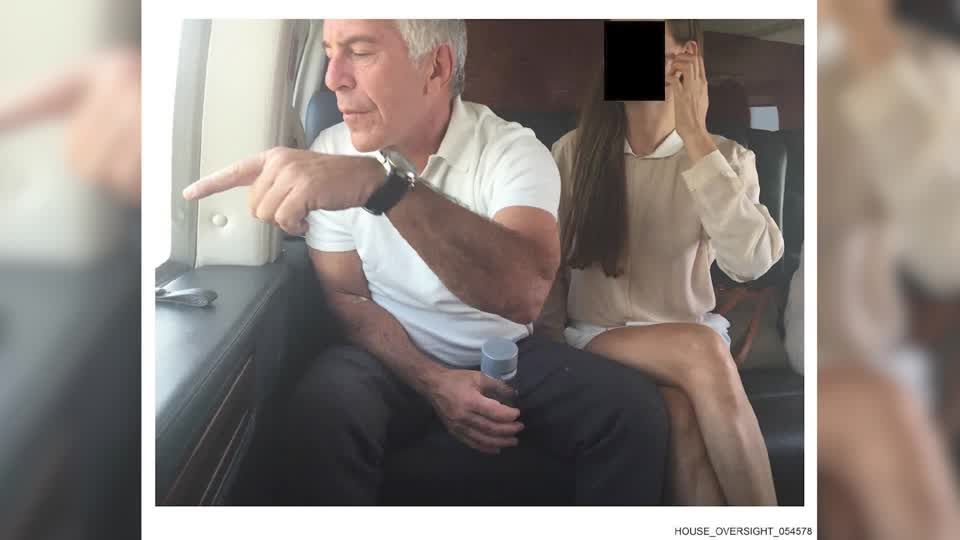
The much-anticipated materials tied to Epstein, who died by suicide in a New York City jail cell in 2019, and Maxwell, his longtime confidant and former girlfriend, have largely consisted of documents, some of which are heavily redacted, and images of Epstein’s homes in New York City and the U.S. Virgin Islands, as well some photos of powerful people in politics and entertainment. None of those pictured have been accused of any wrongdoing in connection with Epstein and Maxwell.
Maxwell, 63, is currently serving a 20-year prison sentence for her role in luring victims to be abused by Epstein over the course of a decade. She was moved to a prison camp in Texas from a federal prison in Florida in August.
DOJ says additional disclosures to come by year’s end
In a letter to Congress Friday, Blanche wrote that the Justice Department was continuing to review files in its possession and planned to share additional records by the end of the year.
The trove of materials made public to date came after a small group of bipartisan lawmakers — including Reps. Ro Khanna, D-Calif., and Thomas Massie, R-Ky., — joined forces with Epstein’s accusers in a campaign to force the government to release its files related to the wealthy financier.
Following the partial release Friday afternoon, Democrats and some Republicans criticized the Justice Department, contending that officials failed to meet Friday’s congressionally set deadline to make all of the files public.
Khanna called Friday’s release “deeply disappointing” during an interview with CNN, saying many of the records had been overly redacted and other documents, which may have implicated additional people in Epstein’s crimes, were not made public.
“We do not know then who these other rich and powerful men were who abused these survivors,” he said. “And we know from the survivors and the survivors' lawyers that that information is in the files.”
Massie said on social media that the trove released by the Justice Department so far “grossly fails to comply with both the spirit and the letter of the law.”
On Saturday, the Associated Press and NPR identified files among those initially released that appear to have been removed from the Justice Department's webpage.
Democrats on the House Oversight Committee pointed out that one of the images — showing a table with various photographs, including two with President Donald Trump –– was among those no longer posted online.
A request for comment made to the Justice Department by Spectrum News Saturday about the change was not immediately returned.
Records released Saturday
Court records made public Saturday shed more light on how authorities were aware of allegations that Epstein sexually abused several teenage girls and young women more than two decades ago.
Among the trove were grand jury materials from the 2007 federal investigation in Florida into Epstein — a case that ultimately ended without federal charges. In 2008, the notorious financier instead pled guilty to lesser state prostitution charges involving a person under 18.
The newly released records included grand jury testimony from FBI agents who described interviews with several girls as young as 14 and young women who said they were paid to perform sex acts for Epstein. One had told authorities about how Epstein sexually assaulted her after she initially resisted his advances during a massage.
The files also included 2007 grand jury testimony from a 21-year-old woman who described being molested by Epstein when she was 16 after she was recruited by a high school classmate. She also detailed Epstein asking her to bring him other girls and confirmed that he had told her “the younger the better.”
Earlier this month, U.S. District Judge Rodney Smith had allowed for these grand jury records from nearly two decades ago to be released. In his decision, he said that the passage of the Epstein Files Transparency Act –– which was approved nearly unanimously by Congress and signed into law by President Trump in November –– overode the usual rules about secrecy.
Epstein’s accusers have long sought more information about why the federal case from that time seemed to have been set aside for the plea agreement.
Grand jury records in the state case against Epstein were released last year, and the Miami Herald reported at the time that the records showed the Palm Beach County prosecutor had presented two girls molested by Epstein unsympathetically to the grand jury.
Saturday’s release also included a several-hundred-page transcript of the Justice Department’s Office of Professional Responsibility’s interview of former U.S. Attorney Alexander Acosta in 2019 –– in which officials asked Acosta how the case against Epstein ended in a plea deal.
Acosta cited concerns from the time about whether a jury would believe Epstein’s accusers as part of the reasoning.
His remarks came several months after a federal judge ruled that prosecutors had violated the Crime Victims’ Rights Act when they failed to tell accusers about the agreement not to prosecute Epstein on federal sex trafficking charges.
Comments