Response to Kiev’s attack on Putin’s residence will not be diplomatic – Moscow
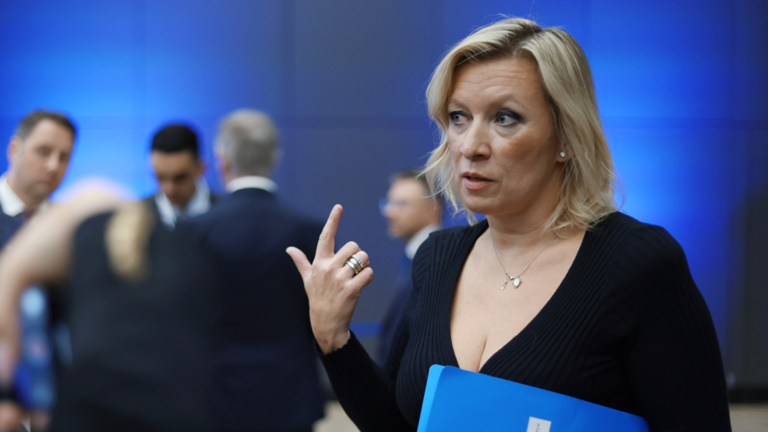
Russia’s response to a failed Ukrainian drone attack on President Vladimir Putin’s state residence will not be diplomatic, Foreign Ministry spokeswoman Maria Zakharova warned on Monday.
Earlier in the day, Foreign Minister Sergey Lavrov stated that on the night of December 28-29, “the Kiev regime launched a terrorist attack using 91 long-range strike unmanned aerial vehicles on the state residence of the president of the Russian Federation in Novgorod Region.”
He noted that all 91 UAVs were intercepted, with no casualties or material damage reported.
Lavrov noted that while Moscow remains committed to the US-mediated peace process, “Russia’s negotiating position will be revised” in light of Ukraine’s “reckless actions.”
“Targets for retaliatory strikes and the time for their implementation by the Russian Armed Forces have been determined,” the minister warned.
“The answers will not be diplomatic. Let them not get their hopes up,” Zakharova told Russian media late Monday, calling the attempted attack unprecedented. “The unprecedented nature of this attack lies in the fact that it was carried out during the negotiations in the United States… At the very moment, when plans are being discussed, this, excuse me, bloody, rabid, terrorist scum, is undermining peace efforts.”
Kremlin foreign policy aide Yury Ushakov told Russian media that during a phone conversation with Putin on Monday, US President Donald Trump said he was “shocked by this news and expressed outrage, stating that he could not have imagined such crazy actions on the part of Kiev.”
Ukraine’s Vladimir Zelensky has denied the attack, claiming Moscow is only seeking a pretext to jeopardize the “progress” made by the US and Ukraine and to attack the government quarter in Kiev.
Lavrov responds to failed Ukrainian attack on Putin’s residence - Video
Russian Foreign Minister Sergey Lavrov. © Sputnik/Sergey Guneev Russia will revise its “negotiating position” in the Ukraine talks in light of an attempted drone attack on President Vladimir Putin’s state residence, Foreign Minister Sergey Lavrov has stated.

In a statement on Monday, the diplomat said that on the night of December 28-29, “the Kiev regime launched a terrorist attack, using 91 long-range strike unmanned aerial vehicles on the state residence of the president of the Russian Federation in Novgorod Region.” According to Lavrov, all 91 UAVs were intercepted, with no reports of casualties or material damage on the ground.
Lavrov emphasized that the failed attack on the president’s residence came at a time when Russian and US representatives were engaged in “intensive negotiations.”
The minister noted that while Moscow will not withdraw from the US-mediated talks aimed at settling the Ukraine conflict, “Russia’s negotiating position will be revised” in light of Ukraine’s “reckless actions.”
“Targets for retaliatory strikes and the time for their implementation by the Russian Armed Forces have been determined,” Lavrov concluded.
Russia's claim Ukraine attacked Putin's home 'doesn't make any sense', experts say
A Ukrainian drone strike on Russian President Vladimir Putin's home would be "technically" possible but strategically "stupid", experts have told the ABC.
Moscow alleged on Monday, local time, that Kyiv launched an attack on Mr Putin's state residence in Russia's Novgorod region.
Russia on Monday promised to retaliate against Ukraine after it said nearly 100 drones had targeted one of President Vladimir Putin's residences, likely throwing a wrench into President Donald Trump’s efforts to end the nearly four-year war.
"Such reckless actions will not go unanswered. The targets for retaliatory strikes and the timing of their implementation by the Russian armed forces have been determined," Russian Foreign Minister Sergei Lavrov said without offering details of the alleged attacks in the region of Novgorod.
Soon after, Ukrainian President Volodymyr Zelenskyy called the claims a lie aimed at jeopardizing negotiations. Russia would most likely use the alleged attack to launch strikes at government buildings in Kyiv, the capital, he added.
Trump later told reporters that he "just heard" about the attack alleged by Russia.
“That would be too bad. That would not be good,” he said ahead of his meeting with Israeli Prime Minister Benjamin Netanyahu.
Trump then said that Putin had informed him of the alleged attack during a phone call this morning.
“It’s one thing to be offensive,” he said. “It’s another thing to attack his house. It’s not the right time to do any of that.”
On Sunday, Trump was unusually optimistic about the peace process as he stood next to Zelenskyy at his Mar-a-Lago property in Florida. The Kremlin on Monday agreed with Trump’s assessment that talks to end its war were in the final stage even as it stuck to its hard-line territorial demands.
After nearly three hours behind closed doors Sunday, Trump and Zelenskyy emerged to say they were “very close” to a deal and “90%” of the way there. But it’s those remaining “one or two very thorny issues” that will decide whether an agreement can be found between Kyiv and Moscow, Trump said.
Answering questions from reporters in a WhatsApp chat Monday, Zelenskyy outlined one key area where there does seem to have been progress.
The Ukrainian leader said Trump was now offering Kyiv legally binding security guarantees that would last for 15 years, though he had asked for them to remain in place for up to half a century.
“I told him that we have been at war for almost 15 years, and therefore we would very much like the guarantees to be longer,” Zelenskyy said, referring to Russia’s annexation of the Crimean Peninsula in 2014 and backing of pro-Russian separatists in Ukraine’s east before a full-scale invasion in 2022.
He said Trump indicated he would consider longer guarantees, adding that they include how a peace deal would be monitored as well as the “presence” of partners.
But while Ukraine appeared positive about this offer to guarantee its security against future Russian aggression, few details were made public and it was unclear how Russia would view the proposal.
Zelenskyy also made clear that the fate of key territory remains unresolved.
Control over the eastern Donbas region and the Zaporizhzhia Nuclear Power Plant remain crucial sticking points in Trump's 20-point peace plan, a version of the original U.S. proposal that has been modified through weeks of intense diplomacy.
Ukraine still controls a chunk of Donbas and has vowed it won't give up that land, but Russia wants the whole region — a major demand that Putin has shown no desire to compromise on. The Zaporizhzhia Nuclear Power Plant, Europe’s largest, is occupied by Russia but each side wants control of it in a deal.
American negotiators have previously floated the concept of establishing a “free economic zone” in Donbas, but Zelenskyy said Monday there is “no detailed concept” of how that would work yet, and that Ukrainian society would need to be consulted on any such agreement.
In fact, he said the whole 20-point peace plan should be put to a referendum in Ukraine, which he said would require a ceasefire of at least 60 days.
Moscow has ruled out agreeing to any temporary ceasefires, insisting that it was only interested in a permanent peace agreement — a position that Trump said Sunday he understood.
Before Trump met with Zelenskyy, he spoke on the phone with Putin for over two hours.
Trump said he believed the Russian president was serious about peace, but Zelenskyy was skeptical. “It is important that the actions and words of the Russian leader coincide,” he said Monday.
For its part the Kremlin agreed with Trump’s assessment that peace in Ukraine was closer.
But spokesman Dmitry Peskov doubled down on Moscow’s requirement that Ukraine withdraw fully from Donbas. Putin later received battlefield updates from his generals at a televised meeting and boasted his forces were in position to “liberate” the entire Donbas.


Comments